
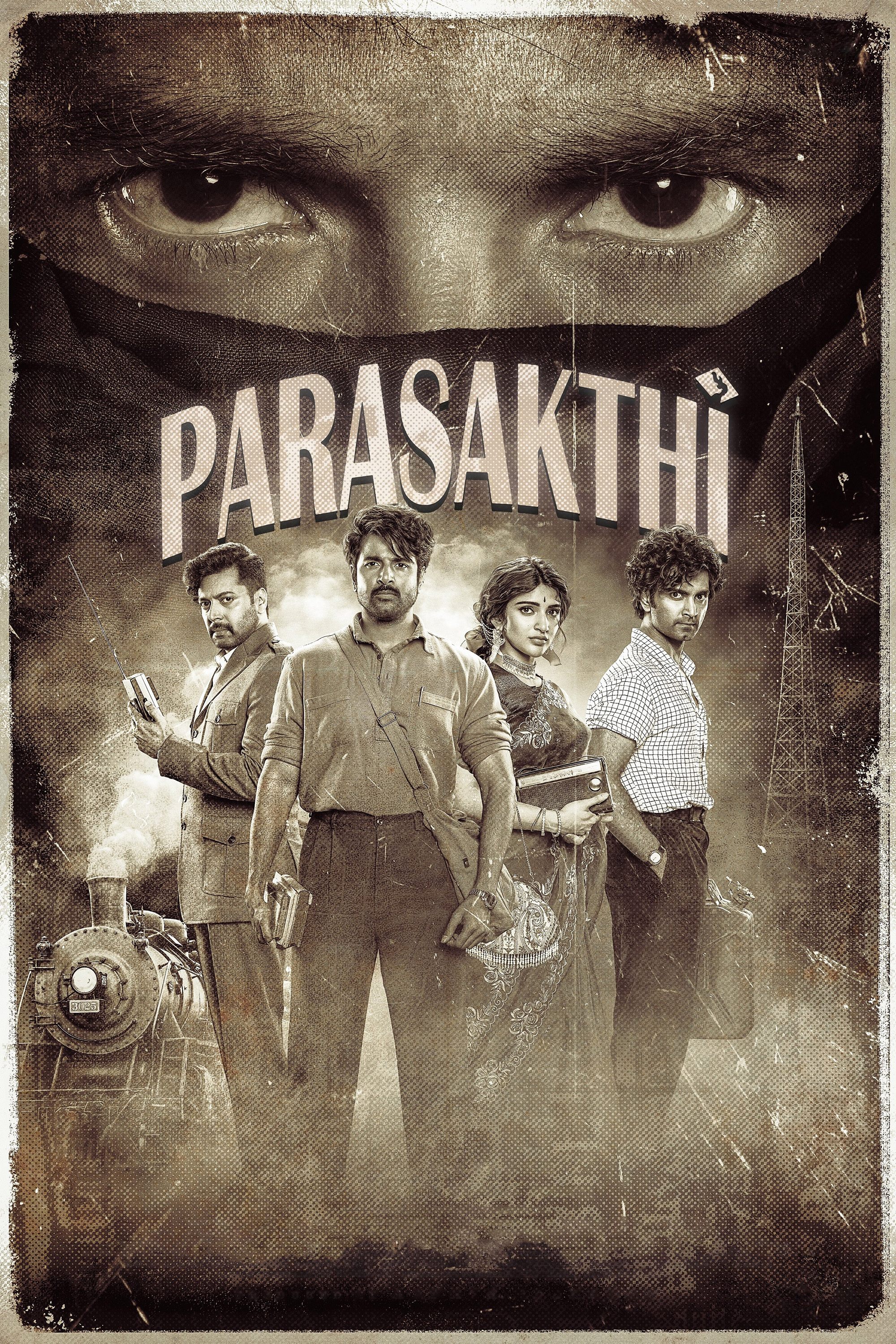
Parasakthi
A fictional pair of Tamil brothers become entangled in the 1965 anti-Hindi administrative language agitation; the movie repeatedly says the movement is against compulsory imposition, not against Hindi speakers.
Original language: Tamil
Culture Check verdict
How we rateMixed / Contested
High confidence · Reviewed 2026-10-11
Tamil linguistic autonomy is a legitimate civilizational-local identity claim; however partisan political symbolism, fictional hero compression and a historical protest backdrop warrant evidence-led separation of historical events from dramatic substitutions.
Read the assessment & evidenceCultural framing · not a film-quality score
Streaming options listed for India · rental or purchase charges may apply.
Why this verdict
The specific findings behind our assessment.
Tamil linguistic autonomy is a legitimate civilizational-local identity claim; however partisan political symbolism, fictional hero compression and a historical protest backdrop warrant evidence-led separation of historical events from dramatic substitutions.
Independent review notes the film avoids vilifying Hindi speakers; opposition to language imposition is not equivalent to anti-Hindu or anti-Indian hostility.
Noticed another scene? Tell us what happens and why it matters to Bharatiya values.
Reviewed 2026-10-11
Read our full editorial analysisWhat the film shows, its cultural framing, and why the verdict follows.
The story
Two fictional Tamil brothers are drawn into the 1965 agitation against compulsory administrative language policy. The reported screenplay distinguishes opposition to imposition from hostility towards Hindi speakers.
What matters in the film
That distinction matters: protecting Tamil’s public place need not reject the people who speak another language. Local linguistic inheritance is a legitimate cultural concern within a wider Indian identity.
Culture Check reading
The historical setting and political symbolism introduce a separate responsibility. Fictional protagonists can compress events and grant particular movements emotional authority without supplying a complete account of the real agitation.
The strongest opposing reading
The strongest positive reading sees the film defending linguistic dignity while resisting the easy villainisation of Hindi-speaking people. This directly limits any claim that the conflict is inherently anti-Indian or anti-Hindu.
Why this verdict
Mixed / Contested preserves that linguistic concern while qualifying the historical and partisan framing. The verdict rests on how the protest is dramatised and authorised, not on treating Tamil attachment itself as a cultural fault.
What this review does not claim
This analysis develops the film-specific published-source record. It does not claim independent full-film viewing, verified verbatim dialogue or knowledge of the filmmaker’s private intentions.
Supporting sources (2)
These sources support the analysis above. The cultural interpretation and verdict are Culture Check’s assessment.
- Cinema Express film review
Supports: The story; What matters in the film; Culture Check reading; The strongest opposing reading; Why this verdict
- Independent historical baseline
Supports: The story; What matters in the film; Culture Check reading; The strongest opposing reading; Why this verdict
Open the full evidence dossier
Signal map, Narrative Integrity and 3 source notes.
Open the full evidence dossier
Signal map, Narrative Integrity and 3 source notes.
Bharatiya signal map
Context for the verdict, not a film-quality score.
Dharma
3/5
Civilization
2/5
Rashtra
2/5
Itihasa
2/5
Parampara
2/5
Local Roots
3/5
Raksha
3/5
Social Dharma
3/5
Sacred Regard
2/5
Contempt Risk
2/5
Narrative Integrity
What changed, what it may mean, and what we can prove.
Evidence trail
Source notes behind this review.
review · Cinema Express film review
A fictional pair of Tamil brothers become entangled in the 1965 anti-Hindi administrative language agitation; the movie repeatedly says the movement is against compulsory imposition, not against Hindi speakers. Tamil linguistic autonomy is a legitimate civilizational-local identity claim; however partisan political symbolism, fictional hero compression and a historical protest backdrop warrant evidence-led separation of historical events from dramatic substitutions.
View sourcereview · JustWatch India — original-language Tamil India OTT listing
Parasakthi is an India-streamable Tamil-original 2026 film on ZEE5. Its synopsis confirms: A fictional pair of Tamil brothers become entangled in the 1965 anti-Hindi administrative language agitation; the movie repeatedly says the movement is against compulsory imposition, not against Hindi speakers.
View sourcereview · Independent historical baseline
The documented 1965 Tamil anti-Hindi agitation included public protest, language policy conflict and deaths; film character events are fictionalized
View sourceCulture Check is a declared Bharatiya cultural signal, not a film-quality rating. Facts, interpretation and claims about intent are kept separate, and factual caveats do not automatically override the certification axis.
Editorial revision history
3 recorded reviews
Open
Editorial revision history
3 recorded reviews
Review 3
2026-10-11
Mixed / Contested
Tamil linguistic autonomy is a legitimate civilizational-local identity claim; however partisan political symbolism, fictional hero compression and a historical protest backdrop warrant evidence-led separation of historical events from dramatic substitutions.
Review 2
2026-10-03
Mixed / Contested
The film gives strong affirmative weight to Tamil linguistic inheritance, student agency and the right of regional communities to preserve language and belonging, producing substantial Local Roots, continuity and historical-memory signals.
Review 1
2026-10-03
Mixed / Contested
The film gives meaningful weight to Tamil political history, language identity and resistance to perceived central imposition, but its overall Bharatiya valence remains contested rather than cleanly affirmative.
About the film
The film.
A fictional pair of Tamil brothers become entangled in the 1965 anti-Hindi administrative language agitation; the movie repeatedly says the movement is against compulsory imposition, not against Hindi speakers.
Keep exploring.
Return to discovery with your OTT filters and find another film.