
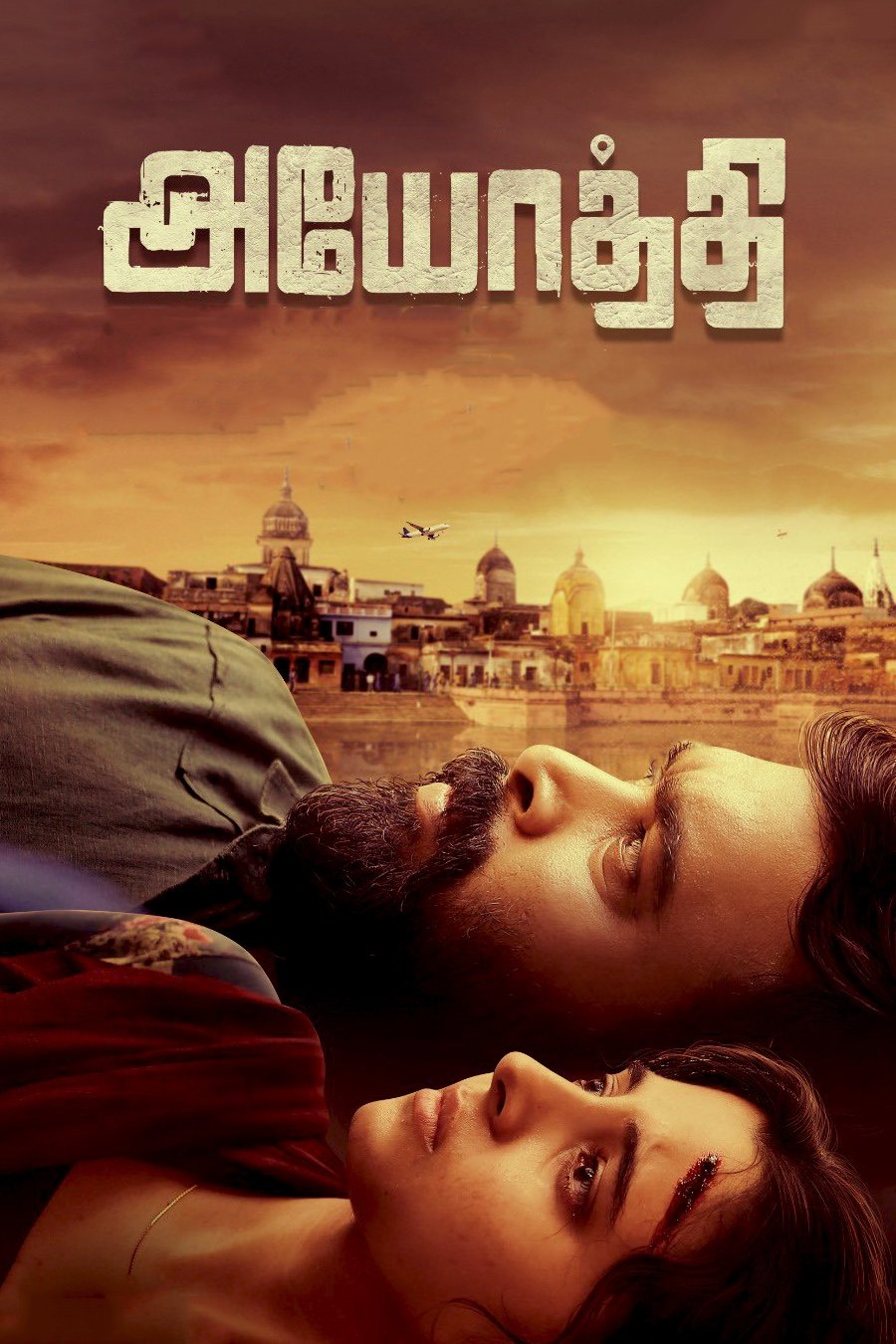
Ayothi
Ayothi contrasts a coercive Hindu-coded father with the Muslim-identified helper Abdul Malik. The original 2011 account names two bank-union helpers and collective logistics assistance; their individual religions are not established by their names.
Original language: Tamil
Culture Check verdict
How we rateMixed / Contested
High confidence · Reviewed 2026-10-13
Mixed, with the religious moral-role contrast stated directly and the family’s duty and daughterly agency retained. The source-to-screen recasting now has a concrete original baseline and is included in the judgment. The existing daughterly agency and respected funeral obligations remain meaningful. The source comparison concerns collective civic assistance and its religiously identified screen replacement.
Read the assessment & evidenceCultural framing · not a film-quality score
Why this verdict
The specific findings behind our assessment.
Mixed, with the religious moral-role contrast stated directly and the family’s duty and daughterly agency retained. The source-to-screen recasting now has a concrete original baseline and is included in the judgment. The existing daughterly agency and respected funeral obligations remain meaningful. The source comparison concerns collective civic assistance and its religiously identified screen replacement.
The helper’s Muslim identity matters because compassionate authority is repeatedly placed against a strongly Hindu-coded father. That is a material narrative comparison. Calling the film humanitarian does not answer how it assigns blame and repair, any more than criticism of one man automatically condemns every believer.
Noticed another scene? Tell us what happens and why it matters to Bharatiya values.
Reviewed 2026-10-13
Read our full editorial analysisWhat the film shows, its cultural framing, and why the verdict follows.
The story and its moral choices
A family’s pilgrimage becomes a crisis when the mother dies after a road accident. Bringing her home and fulfilling funeral obligations become responsibilities that strangers help shoulder. Mourning, travel and practical care give the moral argument a tangible setting.
What the film makes admirable
Balram’s coercion is repeatedly contrasted with the helper’s compassion. His daughter Shivani also challenges him, particularly the distance between care during life and dutiful ceremony after death. The story gives her judgment force rather than reserving every humane choice for the outsider.
The Bharatiya lens reading
The helper’s Muslim identity matters because compassionate authority is repeatedly placed against a strongly Hindu-coded father. That is a material narrative comparison. Calling the film humanitarian does not answer how it assigns blame and repair, any more than criticism of one man automatically condemns every believer.
What this assessment establishes
The funeral obligations are enabled rather than erased, and the daughter’s internal correction remains important. Mathavaraj’s original account identifies two bank-union helpers rather than a lone Abdul Malik. The film recasts that collective assistance around a religiously identified protagonist. The source does not establish every helper’s religion, so this is not described as a proven conversion of one real Hindu man into a Muslim.
Certification
Mixed, with the religious moral-role contrast stated directly and the family’s duty and daughterly agency retained. The source-to-screen recasting now has a concrete original baseline and is included in the judgment. The existing daughterly agency and respected funeral obligations remain meaningful. The source comparison concerns collective civic assistance and its religiously identified screen replacement.
What this review does not claim
Source-grounded synthesis of trusted firsthand comments and explicitly retained film records. No new editor screening or unverified quotation is claimed. Historical assertions remain distinct from observed narrative choices; the review does not claim a new editor screening.
Supporting sources (5)
These sources support the analysis above. The cultural interpretation and verdict are Culture Check’s assessment.
- Owner-designated firsthand viewer — Ayothi, 12 October 2026
Supports: The story and its moral choices; What the film makes admirable; The Bharatiya lens reading; What this assessment establishes; Certification
- Malini Mannath — independent Tamil-film review
Supports: The story and its moral choices; What the film makes admirable; The Bharatiya lens reading; What this assessment establishes; Certification
- Cinema Express — Ayothi completed-film review
Supports: The story and its moral choices; What the film makes admirable; The Bharatiya lens reading; What this assessment establishes; Certification
- Mathavaraj — original 3 September 2011 account, read in its permitted browser view
Supports: The story and its moral choices; What the film makes admirable; The Bharatiya lens reading; What this assessment establishes; Certification
- Mathavaraj — March 2023 source/adaptation and attribution account, read directly
Supports: The story and its moral choices; What the film makes admirable; The Bharatiya lens reading; What this assessment establishes; Certification
Open the full evidence dossier
Signal map, Narrative Integrity and 6 source notes.
Open the full evidence dossier
Signal map, Narrative Integrity and 6 source notes.
Bharatiya signal map
Context for the verdict, not a film-quality score.
Dharma
4/5
Civilization
2/5
Rashtra
1/5
Itihasa
1/5
Parampara
3/5
Local Roots
3/5
Raksha
4/5
Social Dharma
5/5
Sacred Regard
2/5
Contempt Risk
2/5
Narrative Integrity
What changed, what it may mean, and what we can prove.
Evidence trail
Source notes behind this review.
review · Malini Mannath — independent Tamil-film review
A Hindu pilgrim Balram terrorizes his family; after a fatal traffic accident a Tamil stranger helps transport Janaki for funeral rites. The writer interprets the story as humanitarian self-realization, with no claim that all worshippers behave like Balram.
View sourcereview · Cinema Express — Ayothi completed-film review
Balram treats family and cab driver harshly; daughter Shivani condemns hypocrisy of elaborate death customs after cruelty during life. The reviewer notes that the religiously marked father risks caricature.
View sourceofficial · ZEE5 — Ayothi original Tamil feature
Film distributor documents original Tamil audio, 2023 release and a pilgrimage from Ayodhya to Rameswaram followed by tragedy and a stranger providing help.
View sourceprimary · Owner-designated firsthand viewer — Ayothi, 12 October 2026
The contributor identifies adverse Hindu portrayal and claims the protagonist’s religion was changed from an underlying source. The owner’s follow-up names Mathavaraj’s 2011 account and its two bank-union helpers; that original account was independently read. The film’s Abdul Malik identity is assessed without inferring the original helpers’ religions.
View sourceprimary · Mathavaraj — original 3 September 2011 account, read in its permitted browser view
The original account names Vinod Srivatsava’s injured family and the two bank-union helpers Suresh Babu and Samuel Jothikumar. It records practical medical and airline assistance through a union network. It does not identify every helper’s religion or describe an Abdul Malik protagonist. Its help call is dated 31 August; the accident is described as occurring on 30 August.
View sourceprimary · Mathavaraj — March 2023 source/adaptation and attribution account, read directly
The author links his original 2011 account and reproduces it beside the alleged 2018 story supplied to the film team. This is primary evidence of his attribution claim and a source-comparison lead; no court finding or unauthorized-use conclusion is asserted.
View sourceCulture Check is a declared Bharatiya cultural signal, not a film-quality rating. Facts, interpretation and claims about intent are kept separate, and factual caveats do not automatically override the certification axis.
Editorial revision history
3 recorded reviews
Open
Editorial revision history
3 recorded reviews
Review 3
2026-10-13
Mixed / Contested
Mixed, with the religious moral-role contrast stated directly and the family’s duty and daughterly agency retained. The source-to-screen recasting now has a concrete original baseline and is included in the judgment. The existing daughterly agency and respected funeral obligations remain meaningful. The source comparison concerns collective civic assistance and its religiously identified screen replacement.
Review 2
2026-10-11
Mixed / Contested
The family’s pilgrimage, efforts to honor a deceased mother, Shivani’s moral courage and neighborly rescue embody substantial Social Dharma and compassionate duty.
Review 1
2026-10-03
Sanghi Certified
The film turns a pilgrimage tragedy into an argument that compassion, service to strangers and dignity in death are higher duties than rigid ego or social division.
About the film
The film.
Ayothi contrasts a coercive Hindu-coded father with the Muslim-identified helper Abdul Malik. The original 2011 account names two bank-union helpers and collective logistics assistance; their individual religions are not established by their names.
Keep exploring.
Return to discovery with your OTT filters and find another film.