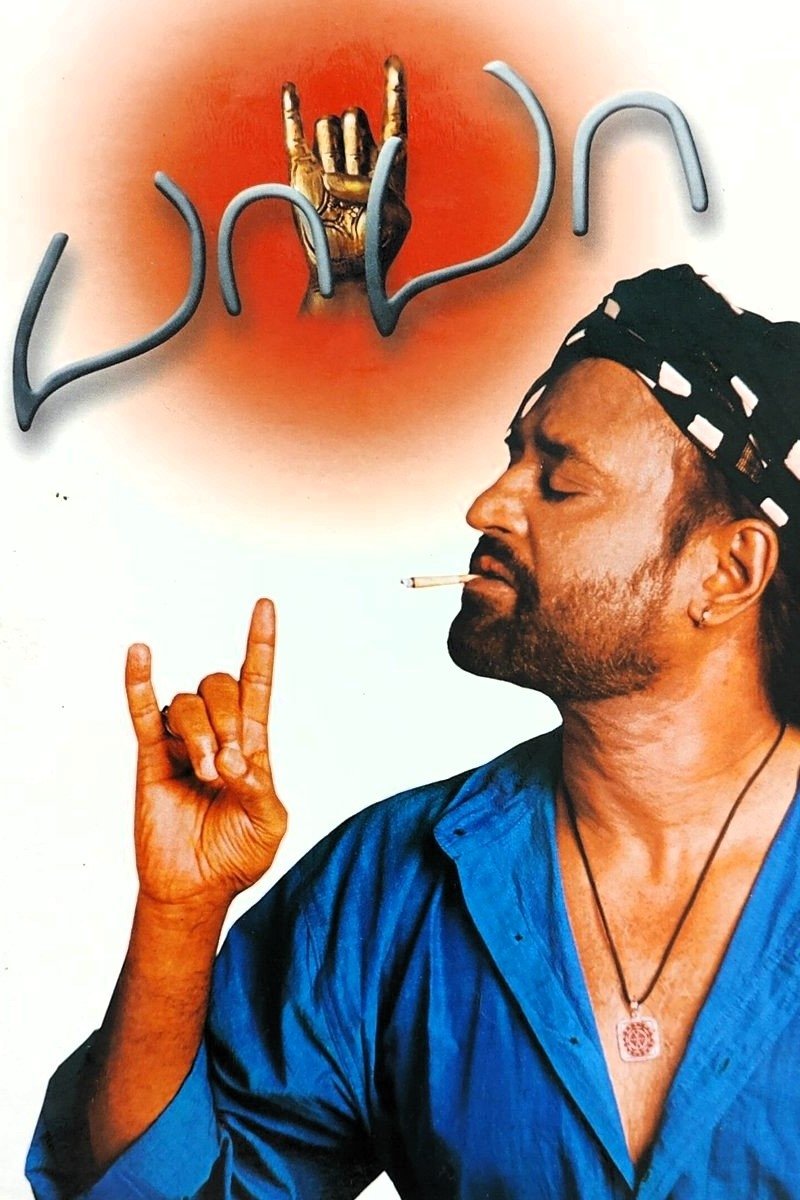
Baba
Baba moves from disbelief and impulsive testing towards devotion, family responsibility and public service. Spiritual authority is allowed to transform the protagonist. The eventual use of a boon for honest leadership gives the miracle device an ethical destination beyond personal amusement.
Original language: Tamil
Culture Check verdict
How we rateSanghi Certified
Medium confidence · Reviewed 2026-10-13
Certified for the original 2002 cut. Its public-duty conclusion must remain distinct from the altered 2022 personal ending and five-boon edit. One canonical movie page can explain the versions; the review does not automatically certify every re-edit.
Read the assessment & evidenceCultural framing · not a film-quality score
Why this verdict
Called an insult. Worn as a badge.
The specific findings behind our assessment.
Certified for the original 2002 cut. Its public-duty conclusion must remain distinct from the altered 2022 personal ending and five-boon edit. One canonical movie page can explain the versions; the review does not automatically certify every re-edit.
The devotional positive is sustained across the arc, not a token shrine scene. The evil priest and simplistic miracles are weighed without being concealed.
Noticed another scene? Tell us what happens and why it matters to Bharatiya values.
Reviewed 2026-10-13
Read our full editorial analysisWhat the film shows, its cultural framing, and why the verdict follows.
The story and its moral choices
Baba moves from disbelief and impulsive testing towards devotion, family responsibility and public service. Spiritual authority is allowed to transform the protagonist. The eventual use of a boon for honest leadership gives the miracle device an ethical destination beyond personal amusement.
The consequential scenes
The corrupt priest remains in the record, as does the criticism that supernatural tricks simplify spiritual life. The stronger positive case is the changed use of power and the guru’s ethical instruction, rather than a claim that the screenplay accurately teaches Kriya Yoga or documents Babaji’s historical lifespan.
The cultural reading
Certified for the original 2002 cut. Its public-duty conclusion must remain distinct from the altered 2022 personal ending and five-boon edit. One canonical movie page can explain the versions; the review does not automatically certify every re-edit.
The scope of this assessment
The story moves from disbelief and careless testing to devotion and public responsibility; the sacred authority remains constructive at its end.
Certification
The devotional positive is sustained across the arc, not a token shrine scene. The evil priest and simplistic miracles are weighed without being concealed.
What this review does not claim
Source-based editorial assessment with owner scene calibration where specified; no independent full-film editor screening or unverified exact dialogue is claimed. Certified applies to the original 2002 cut; the 2022 five-boon re-edit and changed ending are not automatically certified.
Supporting sources (4)
These sources support the analysis above. The cultural interpretation and verdict are Culture Check’s assessment.
- geocities.ws
Supports: The story and its moral choices; The consequential scenes; The cultural reading; The scope of this assessment; Certification
- rajinifans.com
Supports: The story and its moral choices; The consequential scenes; The cultural reading; The scope of this assessment; Certification
- yogananda.org
Supports: The story and its moral choices; The consequential scenes; The cultural reading; The scope of this assessment; Certification
- timesofindia.indiatimes.com
Supports: The story and its moral choices; The consequential scenes; The cultural reading; The scope of this assessment; Certification
Open the full evidence dossier
Signal map, Narrative Integrity and 5 source notes.
Open the full evidence dossier
Signal map, Narrative Integrity and 5 source notes.
Bharatiya signal map
Context for the verdict, not a film-quality score.
Dharma
4/5
Civilization
4/5
Parampara
4/5
Local Roots
4/5
Raksha
4/5
Social Dharma
4/5
Sacred Regard
4/5
Contempt Risk
0/5
Narrative Integrity
What changed, what it may mean, and what we can prove.
Evidence trail
Source notes behind this review.
review · geocities.ws
The land conflict and corrupt leaders give Baba a civic cause; his spiritual transformation precedes the constructive use of the boons. The benevolent Babaji and devout mother coexist with an evil priest used by the politicians. Babaji, the mother’s devotion, the temple climax and a corrupt priest occupy different moral roles. The villain’s yagna is an attempt to capture divine power; the temple climax and elephant blessing affirm sacred agency. The boons initially serve testing and later public benefit; the guru’s closing instruction includes self-discipline, family care and avoiding social harm. The atheist’s transformation and the threat from corrupt leaders give spiritual conviction emotional force. Source scope and remaining qualifications are recorded in the film-specific rule ledger.
View sourcereview · rajinifans.com
The land conflict and corrupt leaders give Baba a civic cause; his spiritual transformation precedes the constructive use of the boons. The original ending leaves a public role open after the honest leader is killed; the re-release changes the ending toward a personal resolution. Babaji, the mother’s devotion, the temple climax and a corrupt priest occupy different moral roles. The boons initially serve testing and later public benefit; the guru’s closing instruction includes self-discipline, family care and avoiding social harm. The atheist’s transformation and the threat from corrupt leaders give spiritual conviction emotional force. Baba’s indulgent and sceptical behaviour is followed by changed belief and more responsible use of the boons; the guru retains a duty toward family. Source scope and remaining qualifications are recorded in the film-specific rule ledger.
View sourceofficial · yogananda.org
The film’s fictional hero meets Babaji, a figure revered in Kriya tradition. SRF explicitly says historical birth/life records are unavailable. The reviewed material presents a spiritual fantasy rather than an identified living source subject’s life or consent claim. No documented scientist or military figure’s real achievement and faith are reconstructed.
View sourcereview · timesofindia.indiatimes.com
The original ending leaves a public role open after the honest leader is killed; the re-release changes the ending toward a personal resolution. The villain’s yagna is an attempt to capture divine power; the temple climax and elephant blessing affirm sacred agency.
View sourceprimary · CultureCheck owner approval and firsthand scene calibration — 13 October 2026
Certified explicitly approved; review is specifically of the original 2002 cut. Recorded from the owner’s actual instruction; verdict approval is not a substitute for the source-specific film findings.
View sourceCulture Check is a declared Bharatiya cultural signal, not a film-quality rating. Facts, interpretation and claims about intent are kept separate, and factual caveats do not automatically override the certification axis.
Editorial revision history
1 recorded review
Open
Editorial revision history
1 recorded review
Review 1
2026-10-13
Sanghi Certified
Certified for the original 2002 cut. Its public-duty conclusion must remain distinct from the altered 2022 personal ending and five-boon edit. One canonical movie page can explain the versions; the review does not automatically certify every re-edit.
About the film
The film.
Baba moves from disbelief and impulsive testing towards devotion, family responsibility and public service. Spiritual authority is allowed to transform the protagonist. The eventual use of a boon for honest leadership gives the miracle device an ethical destination beyond personal amusement.
Keep exploring.
Return to discovery with your OTT filters and find another film.