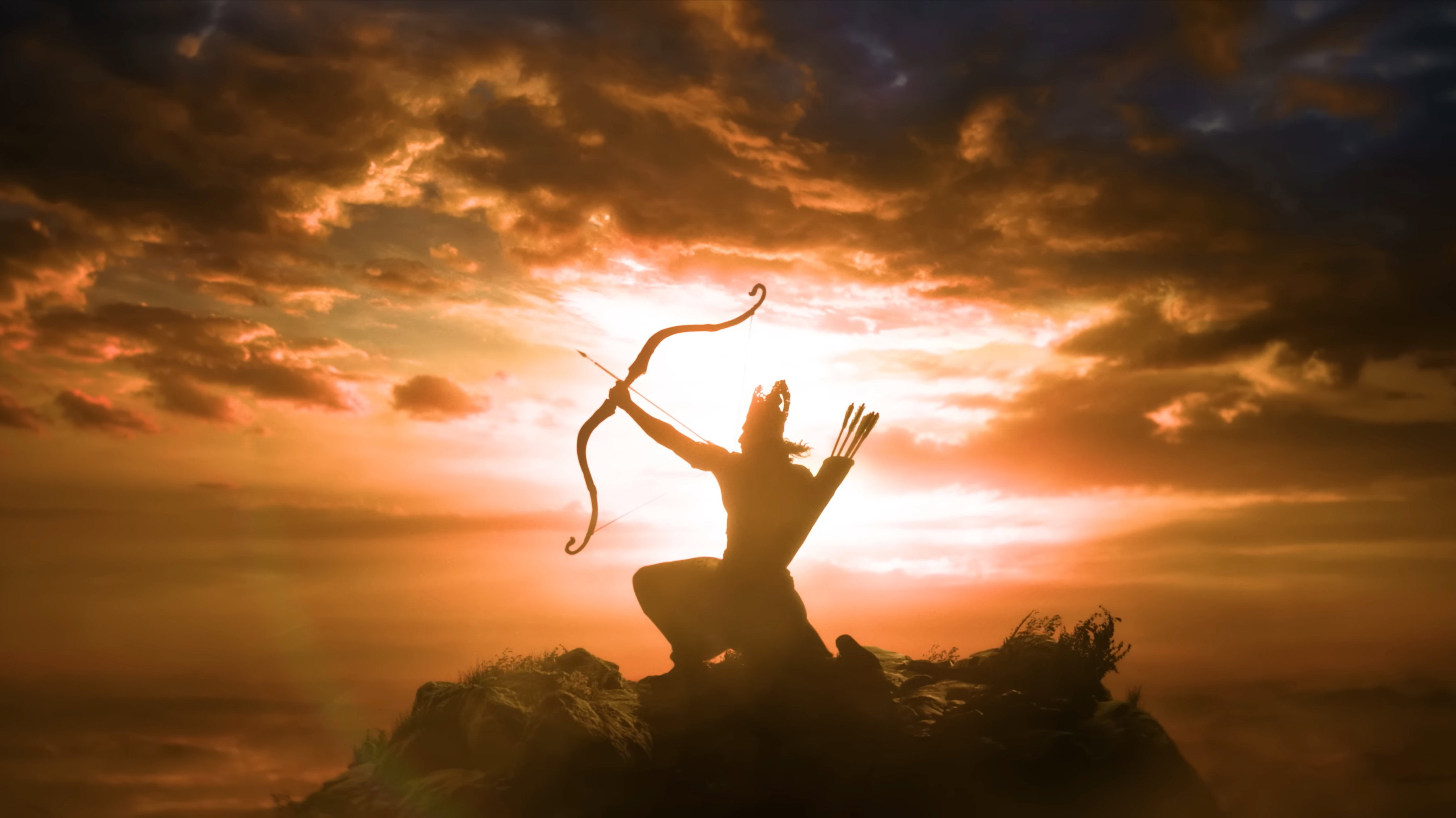
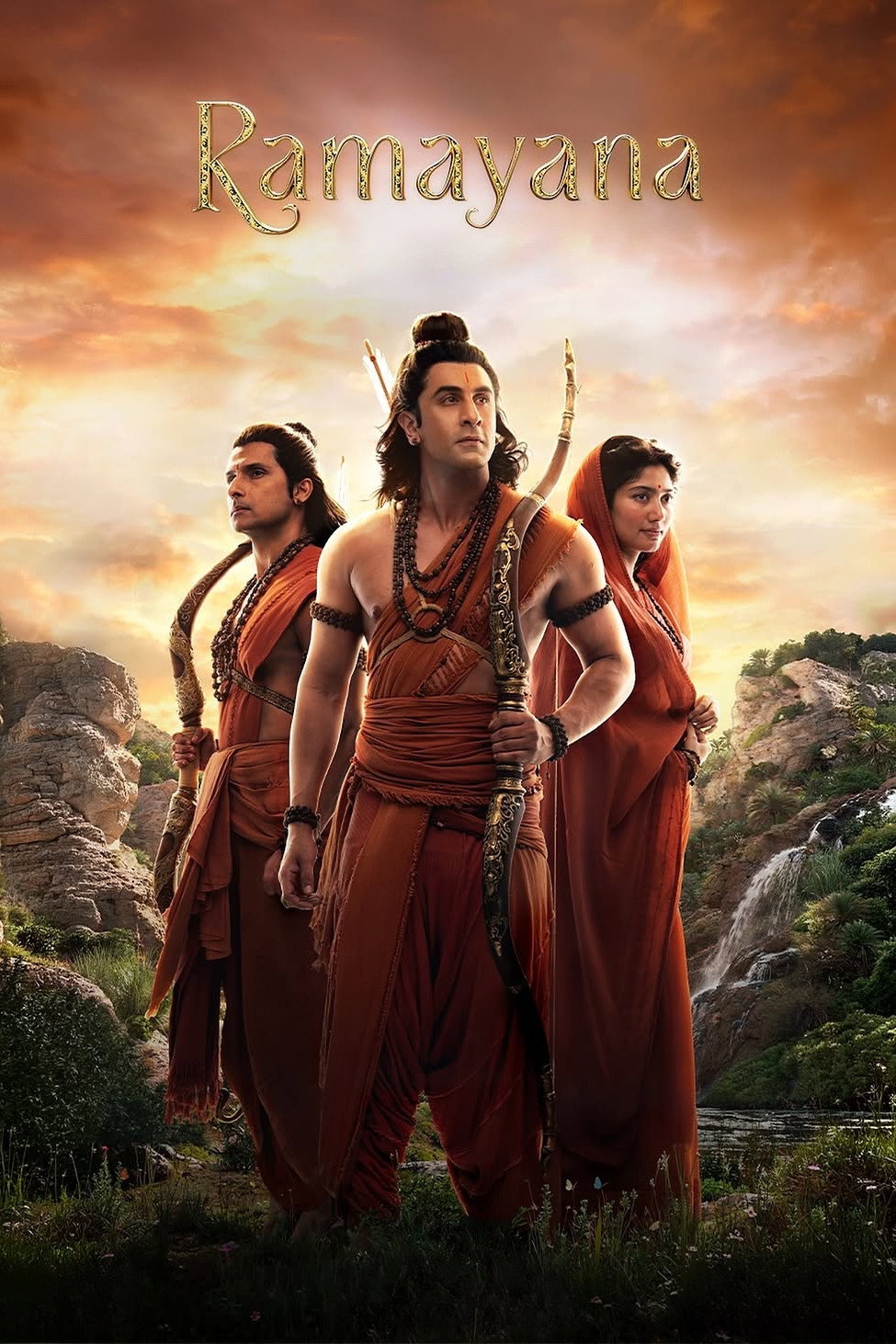
Ramayana
Rama’s early life, exile and Sita’s abduction unfold alongside an expanded account of Dashagriva/Ravana’s rise, Kaikasi’s grievance and the recovery of Lanka.
Original language: Hindi
Culture Check verdict
How we rateReviewed · Neutral
Medium confidence · Reviewed 2026-11-06
Neutral. The adaptation raises material questions about textual fidelity and the moral framing of Ravana, while retaining Rama, Sita and the epic’s dharmic purpose. These concerns deserve attention without prescribing the audience’s response. Watch the film and form your own opinion.
Read the assessment & evidenceCultural framing · not a film-quality score
Why this verdict
The specific findings behind our assessment.
Asura and Rakshasa are not interchangeable
The opening and Shurpanakha’s introduction use Asura terminology for characters identified in the trusted review as Rakshasas.
Scene & reasoning
With Valmiki named as the principal source, the distinction matters to the adaptation’s genealogy and moral context. Epic identities should not be converted into modern caste labels.
Ravana’s conquest gains a liberation rationale
Deprivation, Kaikasi’s prompting and the promise of golden homes give Dashagriva’s rise a compassionate political frame.
Scene & reasoning
Ancestral Lanka is traditional, but it does not by itself justify this emancipation narrative. The cited Valmiki account also records earlier Rakshasa aggression and Kubera’s offer to share.
Compassion shifts the moral emphasis
The trusted review describes Ravana sparing Indra and a scholarly, devotional introduction before his ascent.
Scene & reasoning
These choices expand his moral appeal. Responsibility for conquest and Sita’s abduction remains essential; the concerns stay visible within our Neutral verdict. Watch and form your own opinion.
Noticed another scene? Tell us what happens and why it matters to Bharatiya values.
Reviewed 2026-11-06
Read our full editorial analysisWhat the film shows, its cultural framing, and why the verdict follows.
An epic adaptation with a changed emphasis
Ramayana follows Rama’s early life, exile and Sita’s abduction while giving substantial narrative space to Ravana’s origins and ascent. Its cultural question is how that expanded backstory changes the audience’s understanding of responsibility. Learning, devotion and suffering can make an antagonist more complex. They do not absolve his choices.
The declared source sets the standard
The film identifies Valmiki as its principal source. Yet its use of Asura for Rakshasa characters blurs a distinction central to the genealogy raised in the trusted viewing account. The reported absence and later appearance of the sacred thread around Ravana’s tapas also raises a continuity question. These are specific adaptation and costume observations, not proof of a modern caste agenda.
The stronger concern is Ravana’s political introduction: a deprived community, Kaikasi urging revenge, and a promise to share golden prosperity. This gives conquest an emancipatory emotional logic. Ancestral reclamation does have a textual basis, but the cited Uttara Kanda also records earlier Rakshasa aggression, Kubera’s offer to share and his departure on his father’s advice. Those details materially qualify a simple oppressor-versus-oppressed account.
Sympathy must not replace accountability
Ravana’s scholarly and devotional introduction, followed by a scene of sparing Indra, adds moral appeal beyond ordinary villainous power. Compassion is a defining part of Rama’s dharmic stature; redistributing that emphasis changes the contrast between the protagonists. The question is not whether Ravana can possess admirable qualities, but whether the narrative gives his ambitions moral legitimacy without proportionate accountability.
The Kailasa hymn and dance sequence raises a separate source-fidelity question. The supplied scholarly account distinguishes the singing of samans in the Valmiki episode from the popular stotra presentation. We do not adopt a precise date for that hymn from this excerpt. Nor does a tentatively heard Tamil/Telugu chorus establish a deliberate regional political message. These narrower limits preserve the stronger characterization argument.
The earlier account of Ravana intervening for a woman must be read against Sita’s refusal and deliberate abduction. Inner voices, maternal influence or a compassionate speech cannot erase agency. The supplied partial transcript does not authorize reconstructing the entire Shurpanakha exchange or claiming every act of misconduct was removed.
Neutral — watch and form your own opinion
Neutral. The adaptation raises material questions about textual fidelity and the moral framing of Ravana, while retaining Rama, Sita and the epic’s dharmic purpose. These concerns deserve attention without prescribing the audience’s response. Watch the film and form your own opinion.
The textual and characterization concerns remain part of this assessment. Neutral is our overall cultural judgment. The detailed critique can inform a viewing without deciding in advance how every viewer must respond to the film.
What this review does not claim
Primary viewing evidence is the owner-designated Dushyanth Sridhar review, supplied as a cleaned partial auto-caption transcript. The excerpt was read in full; the complete video and film were not independently played by this editor. Earlier inspected criticism and Valmiki passages are retained. Tentative chorus identification, hymn dating and botanical chronology are not established facts. No exact dialogue, timecodes or missing later transcript are reconstructed.
Supporting sources (8)
These sources support the analysis above. The cultural interpretation and verdict are Culture Check’s assessment.
- Dushyanth Sridhar — owner-designated trusted firsthand review; supplied partial transcript
Supports: An epic adaptation with a changed emphasis; The declared source sets the standard; Sympathy must not replace accountability; Neutral — watch and form your own opinion
- Telugu Cinema · Jalapathy Gudelli · 5 November 2026
Supports: An epic adaptation with a changed emphasis; Neutral — watch and form your own opinion
- Valmiki Ramayana · Uttara Kanda 6 · Hari Prasad Shastri translation
Supports: The declared source sets the standard
- Valmiki Ramayana · Uttara Kanda 11 · Hari Prasad Shastri translation
Supports: The declared source sets the standard
- Valmiki Ramayana · Aranya Kanda 49 · Hari Prasad Shastri translation
Supports: Sympathy must not replace accountability
- Cinema Express · Yash interview report · 3 November 2026
Supports: Sympathy must not replace accountability
- Rediff · Sreeju Sudhakaran · 5 November 2026
Supports: Sympathy must not replace accountability
- Owner verification and explicit Neutral decision, 6 November 2026
Supports: Neutral — watch and form your own opinion
Open the full evidence dossier
Signal map, Narrative Integrity and 10 source notes.
Open the full evidence dossier
Signal map, Narrative Integrity and 10 source notes.
Bharatiya signal map
Context for the verdict, not a film-quality score.
Dharma
3/5
Civilization
3/5
Itihasa
2/5
Parampara
3/5
Local Roots
3/5
Raksha
3/5
Social Dharma
3/5
Sacred Regard
3/5
Contempt Risk
3/5
Narrative Integrity
What changed, what it may mean, and what we can prove.
Evidence trail
Source notes behind this review.
primary · Dushyanth Sridhar — owner-designated trusted firsthand review; supplied partial transcript
The owner supplied and designated a cleaned, partial auto-caption transcript as primary viewing evidence. Sridhar reports a Valmiki disclaimer, Asura/Rakshasa terminology, deprived Rakshasas, Kaikasi prompting tapas, a shared-gold promise, inconsistent sacred-thread costume, Ravana sparing Indra and a Kailasa hymn/dance sequence. Access describes the supplied excerpt read in full, not independent playback or the complete 33-minute video. His chorus observation is expressly tentative; hymn dating and botanical chronology are not adopted as verified facts.
View sourceprimary · Owner verification and explicit Neutral decision, 6 November 2026
Owner states all claims have been verified, explicitly requests Neutral with an invitation to watch and form independent opinions, and subsequently designates Dushyanth Sridhar as a trusted Ramayana authority and primary source while retaining Neutral. No editor screening or verification of missing transcript portions is claimed.
View sourcereview · Rediff · Sreeju Sudhakaran · 5 November 2026
Previously inspected full review describes an oppressed Asura community, Ravana’s violent conquest, promised shared prosperity, intervention for a woman and the Jatayu confrontation.
View sourcereview · Scroll · Nandini Ramnath · 5 November 2026
Previously inspected full review describes smuggled grain reaching Kaikasi’s deprived community, Ravana’s protective intervention and piety around Rama and Sita; it does not establish a personal starvation order by Kubera.
View sourcereview · Telugu Cinema · Jalapathy Gudelli · 5 November 2026
Previously inspected full review retains Ravana’s tyranny, Indra seeking Vishnu’s intervention, disguised abduction and dignified Rama and Sita; these limit categorical moral inversion.
View sourcereview · Cinema Express · Yash interview report · 3 November 2026
Previously inspected interview report describes multiple psychological voices as Yash’s acting device; it does not establish loss of responsibility for abduction.
View sourcereview · Valmiki Ramayana · Uttara Kanda 6 · Hari Prasad Shastri translation
Previously inspected Uttara Kanda 6 in the Shastri translation describes earlier Rakshasa aggression against gods and sages, qualifying an innocent-persecuted-community account.
View sourcereview · Valmiki Ramayana · Uttara Kanda 11 · Hari Prasad Shastri translation
Previously inspected Uttara Kanda 11 records the ancestral Lanka claim, Kubera’s offer to share kingdom and wealth, and departure on paternal advice; this transfer is distinct from the later conquest.
View sourcereview · Valmiki Ramayana · Aranya Kanda 34 · Hari Prasad Shastri translation
Previously inspected Aranya Kanda 34 records Shurpanakha describing Sita and urging Ravana to take her; this is a stated textual baseline rather than invented film dialogue.
View sourcereview · Valmiki Ramayana · Aranya Kanda 49 · Hari Prasad Shastri translation
Previously inspected Aranya Kanda 49 records Ravana deliberately seizing Sita against her will; her refusal and his agency are the textual accountability baseline.
View sourceCulture Check is a declared Bharatiya cultural signal, not a film-quality rating. Facts, interpretation and claims about intent are kept separate, and factual caveats do not automatically override the certification axis.
Editorial revision history
1 recorded review
Open
Editorial revision history
1 recorded review
Review 1
2026-11-06
Reviewed · Neutral
Neutral. The adaptation raises material questions about textual fidelity and the moral framing of Ravana, while retaining Rama, Sita and the epic’s dharmic purpose. These concerns deserve attention without prescribing the audience’s response. Watch the film and form your own opinion.
About the film
The film.
Rama’s early life, exile and Sita’s abduction unfold alongside an expanded account of Dashagriva/Ravana’s rise, Kaikasi’s grievance and the recovery of Lanka.
Keep exploring.
Return to discovery with your OTT filters and find another film.