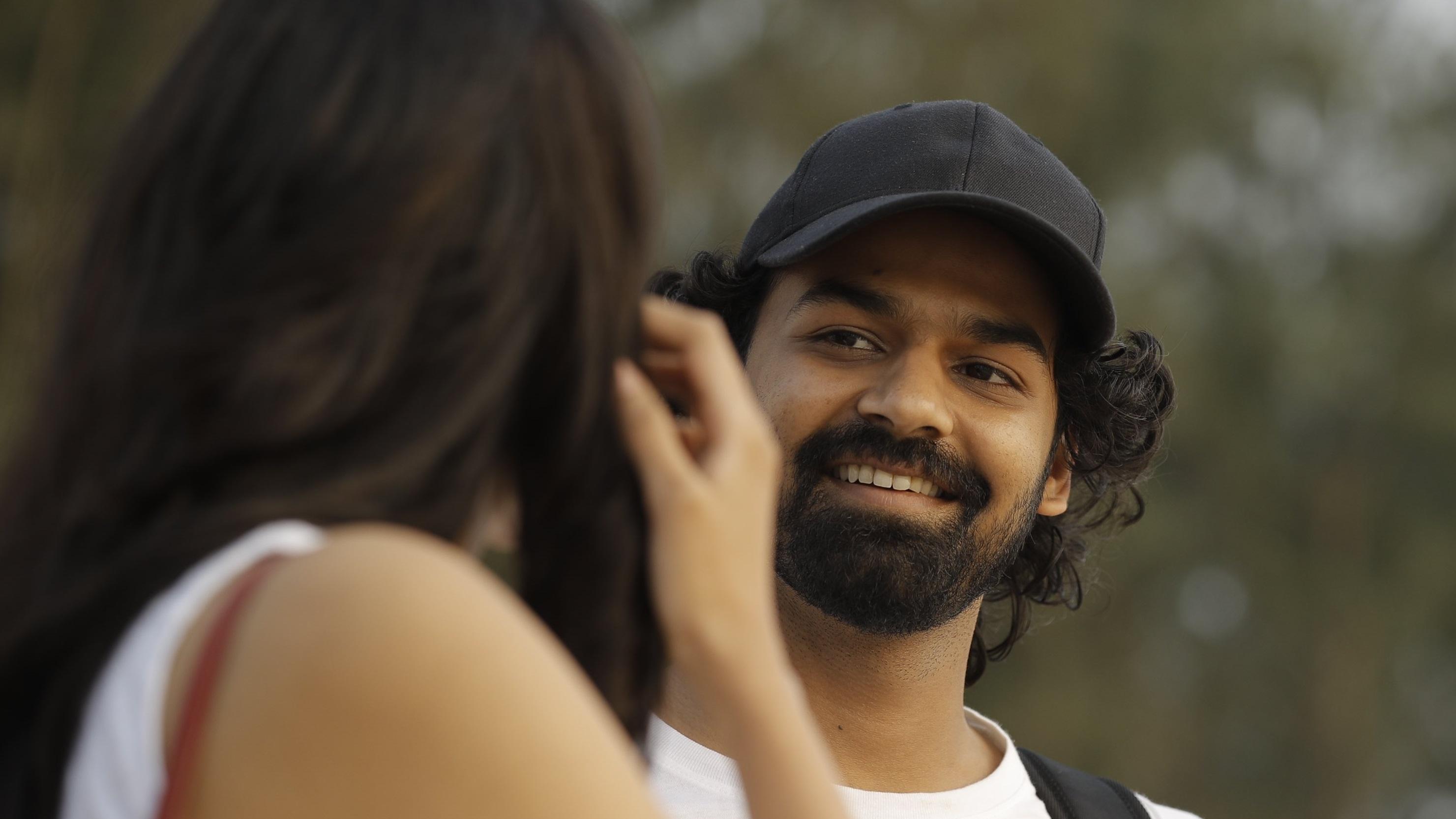

Hridayam
Arun’s engineering-college years, early relationship with Darshana, friendship with Selva and later working and family life with Nithya form a personal-growth story.
Original language: Malayalam
Culture Check verdict
How we rateReviewed · Not Certified
Medium confidence · Reviewed 2026-11-03
The Gomatha Tea Stall sign appears in the same sequence as a reference to parotta and beef fry. CultureCheck finds this juxtaposition disrespectful to the cow-as-mother sacred association.
Read the assessment & evidenceCultural framing · not a film-quality score
Why this verdict
Does not meet Culture Check’s civilizational certification standard · Not a film-quality score
The specific findings behind our assessment.
“Gomatha” beside a beef-fry reference
The Gomatha Tea Stall sign accompanies dialogue mentioning hot parotta and beef fry.
Scene & reasoning
The dialogue refers to people eating at home. The finding concerns the sacred-name juxtaposition, not an assertion that the stall serves beef.
Casual irreverence in an ordinary exchange
A cow-as-mother sacred association becomes the setting for the food reference.
Scene & reasoning
CultureCheck judges the arrangement culturally disrespectful. The moral-policing subtitle adds social framing, but its exact target and the creators’ private motives are not established.
Noticed another scene? Tell us what happens and why it matters to Bharatiya values.
Reviewed 2026-11-03
Read our full editorial analysisWhat the film shows, its cultural framing, and why the verdict follows.
A growth story with a specific cultural fault line
Hridayam follows Arun through engineering-college life, the breakdown of an early relationship, friendship, work and a later family life. Its appeal lies in personal memory and emotional change. That broader story matters to the assessment: the objection here concerns a specific sacred reference within it, rather than a claim that every relationship or moment of affection carries hostility.
The name and the conversation occupy the same setting
The supplied frames identify the establishment as Gomatha Tea Stall. A subtitle refers to people sitting at home eating hot parotta and beef fry. Another frame contains a hope that there will be no moral policing. These are concrete screen details. Crucially, dialogue about a meal at home does not establish what the stall sells. The public finding therefore identifies the name and the conversation without inventing a menu.
Why the sacred name changes the meaning
Gomatha invokes the cow revered as mother. Placing that name beside an approving reference to beef creates a collision between sacred regard and consumption. CultureCheck reads this arrangement as trivialization of a Hindu sentiment within an easy social exchange. The film’s cultural meaning is shaped by such combinations of setting and speech, even when they occupy little screen time.
The moral-policing remark contributes to the scene’s casual social register. Its precise target is not established by the frames, so the review does not turn it into a proven reply to Hindu objections. The stronger argument rests on the visible name and the documented food reference themselves.
Not Certified: the sacred-reference choice remains decisive
The film’s friendship, educational recovery and eventual domestic stability retain their positive weight. They do not automatically repair an independently adverse sacred-reference choice. Under CultureCheck’s Hindu/Bharatiya-civilizational standard, the Gomatha-and-beef juxtaposition is sufficiently material to withhold certification. This judgment concerns the constructed scene and its effect; it does not assert an unverified conspiracy or a private confession of malicious intent.
What this review does not claim
The editor inspected owner-supplied JioHotstar frames and the supplied post text, alongside completed-film written accounts. No independent full screening, exact timecode, stall menu or private creator motive is claimed.
Supporting sources (4)
These sources support the analysis above. The cultural interpretation and verdict are Culture Check’s assessment.
- The Week — completed-film review, 21 January 2022
Supports: A growth story with a specific cultural fault line; Not Certified: the sacred-reference choice remains decisive
- Tusshar Sasi — firsthand completed-film review, 22 January 2022
Supports: A growth story with a specific cultural fault line; Not Certified: the sacred-reference choice remains decisive
- CultureCheck owner-supplied viewed-scene screenshots and post
Supports: The name and the conversation occupy the same setting; Why the sacred name changes the meaning; Not Certified: the sacred-reference choice remains decisive
- Hridayam subtitle transcript
Supports: The name and the conversation occupy the same setting
Open the full evidence dossier
Signal map, Narrative Integrity and 4 source notes.
Open the full evidence dossier
Signal map, Narrative Integrity and 4 source notes.
Bharatiya signal map
Context for the verdict, not a film-quality score.
Dharma
3/5
Civilization
2/5
Parampara
2/5
Local Roots
4/5
Social Dharma
3/5
Sacred Regard
1/5
Contempt Risk
4/5
Narrative Integrity
What changed, what it may mean, and what we can prove.
Evidence trail
Source notes behind this review.
primary · CultureCheck owner-supplied viewed-scene screenshots and post
The owner supplied two JioHotstar frames and the post text: the Gomatha Tea Stall sign accompanies a conversation referring to people at home eating parotta and beef fry. A frame also subtitles a hope that there will be no moral policing. No claim that this stall serves beef follows from these frames.
View sourceprimary · Hridayam subtitle transcript
The available subtitle text identifies Gomatha Tea Stall and contains beef/parotta references. It is corroborative transcription, not an independent film screening or proof of the establishment’s menu.
View sourcereview · The Week — completed-film review, 21 January 2022
The narrative follows Arun from engineering-college romance with Darshana through Selva’s positive educational influence, later photography work, his relationship with Nithya and becoming a father. This supplies whole-story context for weighing a localized sacred-reference concern.
View sourcereview · Tusshar Sasi — firsthand completed-film review, 22 January 2022
The viewer describes a romance organized around Arun, with personal journeys for Darshana and Nithya, moments of agency for the latter, emotional music, friendship and eventual domestic stability. These affirmative story features do not themselves establish that the Gomatha naming is culturally respectful.
View sourceCulture Check is a declared Bharatiya cultural signal, not a film-quality rating. Facts, interpretation and claims about intent are kept separate, and factual caveats do not automatically override the certification axis.
Editorial revision history
1 recorded review
Open
Editorial revision history
1 recorded review
Review 1
2026-11-03
Reviewed · Not Certified
The Gomatha Tea Stall sign appears in the same sequence as a reference to parotta and beef fry. CultureCheck finds this juxtaposition disrespectful to the cow-as-mother sacred association.
About the film
The film.
Arun’s engineering-college years, early relationship with Darshana, friendship with Selva and later working and family life with Nithya form a personal-growth story.
Keep exploring.
Return to discovery with your OTT filters and find another film.