
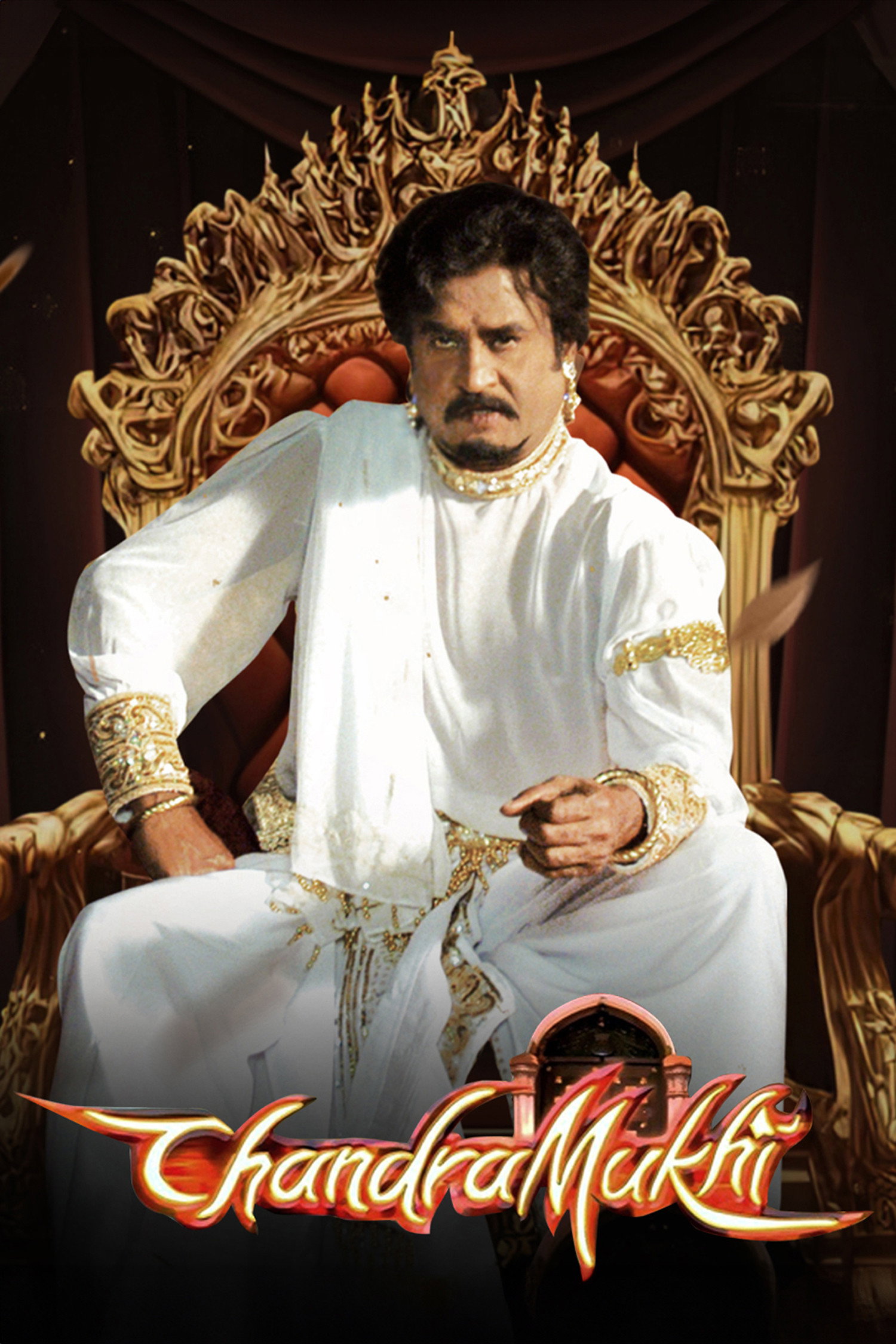
Chandramukhi
Chandramukhi begins its moral conflict inside a palace, where a ruler treats a dancer as something he can own. Vettaiyan’s desire becomes coercion, and his retaliation against her lover produces the tragedy around which the household’s fear gathers. Rajinikanth playing the ruler does not make that conduct Dharmic: the king is a warning about authority severed from restraint.
Original language: Tamil
Culture Check verdict
How we rateSanghi Certified
Medium confidence · Reviewed 2026-10-14
Saravanan investigates the crisis through psychiatric knowledge. Ramachandra Acharya nevertheless remains more than a superstitious obstacle waiting to be defeated. When the household turns against the doctor, the Acharya recognizes his competence and protects his place in the rescue. He subsequently participates in the ritual setting through which Ganga’s crisis is resolved. That allocation of judgment and action is the film’s important Hindu-civilizational positive.
Read the assessment & evidenceCultural framing · not a film-quality score
Why this verdict
Called an insult. Worn as a badge.
The specific findings behind our assessment.
Saravanan investigates the crisis through psychiatric knowledge. Ramachandra Acharya nevertheless remains more than a superstitious obstacle waiting to be defeated. When the household turns against the doctor, the Acharya recognizes his competence and protects his place in the rescue. He subsequently participates in the ritual setting through which Ganga’s crisis is resolved. That allocation of judgment and action is the film’s important Hindu-civilizational positive.
Certified rests on the film’s affirmative arrangement of sacred regard and responsibility. Protection and healing preserve Hindu civilizational agency while correcting individual cruelty; the household’s inherited world survives as a place capable of care. This judgment concerns the story’s cultural meaning, not its commercial success, its medical accuracy or a claim that every ritual practitioner is virtuous.
Noticed another scene? Tell us what happens and why it matters to Bharatiya values.
Reviewed 2026-10-14
Read our full editorial analysisWhat the film shows, its cultural framing, and why the verdict follows.
Power is not a right to possess
Chandramukhi begins its moral conflict inside a palace, where a ruler treats a dancer as something he can own. Vettaiyan’s desire becomes coercion, and his retaliation against her lover produces the tragedy around which the household’s fear gathers. Rajinikanth playing the ruler does not make that conduct Dharmic: the king is a warning about authority severed from restraint.
The Acharya keeps consequential authority
Saravanan investigates the crisis through psychiatric knowledge. Ramachandra Acharya nevertheless remains more than a superstitious obstacle waiting to be defeated. When the household turns against the doctor, the Acharya recognizes his competence and protects his place in the rescue. He subsequently participates in the ritual setting through which Ganga’s crisis is resolved. That allocation of judgment and action is the film’s important Hindu-civilizational positive.
Correcting cruelty within inherited belonging
The childhood account of caste exclusion and funeral humiliation is a serious qualification. It gives inherited social cruelty responsibility for suffering; the cruelty cannot be dismissed because the film also contains worship. The decisive question is where repair comes from. Here the family’s religious world is allowed a morally capable participant in the Acharya. Ganga is not required to leave Hindu belonging, and another faith is not installed as the source of her liberation.
Saravanan’s protection of the wrongly suspected Durga and support for Priya’s chosen relationship give Dharma practical content. Care requires inquiry, restraint and willingness to bear risk, rather than obedience to whoever holds family or royal power. The final restoration of the household allows Parampara to continue through correction of harmful conduct.
What the positive reading rests on
The staged cure makes psychiatric explanation central; the review does not treat it as proof of supernatural intervention. The positive claim is narrower and more concrete: the Acharya retains dignity, discernment and a consequential role in healing. Comic religious failure and crude marital jokes coexist with that role. Ganga’s dependence on authoritative men also limits any claim that the film gives every woman equal voice.
Why Chandramukhi is Certified
Certified rests on the film’s affirmative arrangement of sacred regard and responsibility. Protection and healing preserve Hindu civilizational agency while correcting individual cruelty; the household’s inherited world survives as a place capable of care. This judgment concerns the story’s cultural meaning, not its commercial success, its medical accuracy or a claim that every ritual practitioner is virtuous.
The adaptation’s literary debt also deserves recognition. Madhu Muttom’s source story and the documented rights dispute remain part of the record. A procedural court order is not turned into either a plagiarism conviction or blanket exoneration.
What this review does not claim
Assessment of the original Tamil 2005 film from completed-film reviews, a published English subtitle text, cultural criticism and a court record. No independent full-film screening or exact Tamil quotation is claimed. The apparent cure is a fictional device, not medical guidance. The 2007 rights order does not establish a final infringement outcome; this review preserves Madhu Muttom’s source-story attribution.
Supporting sources (6)
These sources support the analysis above. The cultural interpretation and verdict are Culture Check’s assessment.
- A. Ganesh Nadar — Rediff, 14 April 2005
Supports: Power is not a right to possess; Correcting cruelty within inherited belonging
- Balaji Balasubramaniam — completed Tamil-film viewing review
Supports: Power is not a right to possess; What the positive reading rests on
- Forever Dreaming — published English subtitle text for the 2005 film
Supports: The Acharya keeps consequential authority; Correcting cruelty within inherited belonging; What the positive reading rests on; Why Chandramukhi is Certified
- Kumuthan Maderya — PopMatters, 31 October 2014
Supports: The Acharya keeps consequential authority; What the positive reading rests on; Why Chandramukhi is Certified
- Sathish K — Tamil viewing account, 15 April 2005
Supports: Correcting cruelty within inherited belonging
- Kerala High Court — Madhu Muttom v. Fazil, 19 September 2007
Supports: Why Chandramukhi is Certified
Open the full evidence dossier
Signal map, Narrative Integrity and 7 source notes.
Open the full evidence dossier
Signal map, Narrative Integrity and 7 source notes.
Bharatiya signal map
Context for the verdict, not a film-quality score.
Dharma
4/5
Civilization
4/5
Parampara
4/5
Local Roots
4/5
Raksha
4/5
Social Dharma
3/5
Sacred Regard
4/5
Contempt Risk
1/5
Narrative Integrity
What changed, what it may mean, and what we can prove.
Evidence trail
Source notes behind this review.
review · A. Ganesh Nadar — Rediff, 14 April 2005
The release-day Tamil review describes the dancer’s coercion and killing by the king, the married couple entering the palace, the psychiatrist’s intervention, and the centrality of Ganga. It also records the production-banner prayer. Commercial praise is not used as certification evidence.
View sourcereview · Balaji Balasubramaniam — completed Tamil-film viewing review
Describes the court-dancer legend, suspicion of Durga, Murugesan’s ghost-fear and marital-jealousy comedy, the psychiatrist’s explanation and the consequential Ra Ra climax. The romance and crude jokes remain qualifications rather than a claim of flawless family entertainment.
View sourcereview · Sathish K — Tamil viewing account, 15 April 2005
Describes the threatened household, attempts on Senthil, Saravanan protecting the wrongly suspected Durga, Priya’s chosen marriage and the puja sequence during which Saravanan communicates as Vettaiyan. No unreported mantra parody or caste name is inferred.
View sourcefilm · Forever Dreaming — published English subtitle text for the 2005 film
Text evidence covers Ganga’s childhood caste/funeral humiliation, the Acharya defending the doctor and participating in the staged resolution, and devotional and work-dignity song references. Translation is not authentication of exact Tamil speech, lyrics, visual composition or a clinical treatment claim.
View sourcereview · Kumuthan Maderya — PopMatters, 31 October 2014
The original critical essay identifies the film’s combination of psychiatric explanation with Hindu-priest assistance and criticizes its confused psychology. Its broader genre argument about religious continuity informs a counter-reading; it is not evidence of this director’s private political intentions.
View sourceprimary · Kerala High Court — Madhu Muttom v. Fazil, 19 September 2007
The judgment records the source writer’s remake-rights dispute, an earlier interim author-credit direction, and disposal of the injunction appeal without deciding ownership merits. This primary court record supports careful attribution, not a claim that Chandramukhi was judicially proved to be plagiarism or fully exonerated.
View sourceofficial · TMDb movie details and actor credits — verified 14 October 2026
ID 53122 is the original Tamil Chandramukhi, released 14 April 2005, with Rajinikanth as Saravanan/Vettaiyan and Avinash as Ramachandra Acharya. The poster endpoint returned an image. Metadata establishes identity, not cultural scene interpretation.
View sourceCulture Check is a declared Bharatiya cultural signal, not a film-quality rating. Facts, interpretation and claims about intent are kept separate, and factual caveats do not automatically override the certification axis.
Editorial revision history
1 recorded review
Open
Editorial revision history
1 recorded review
Review 1
2026-10-14
Sanghi Certified
Saravanan investigates the crisis through psychiatric knowledge. Ramachandra Acharya nevertheless remains more than a superstitious obstacle waiting to be defeated. When the household turns against the doctor, the Acharya recognizes his competence and protects his place in the rescue. He subsequently participates in the ritual setting through which Ganga’s crisis is resolved. That allocation of judgment and action is the film’s important Hindu-civilizational positive.
About the film
The film.
Chandramukhi begins its moral conflict inside a palace, where a ruler treats a dancer as something he can own. Vettaiyan’s desire becomes coercion, and his retaliation against her lover produces the tragedy around which the household’s fear gathers. Rajinikanth playing the ruler does not make that conduct Dharmic: the king is a warning about authority severed from restraint.
Keep exploring.
Return to discovery with your OTT filters and find another film.