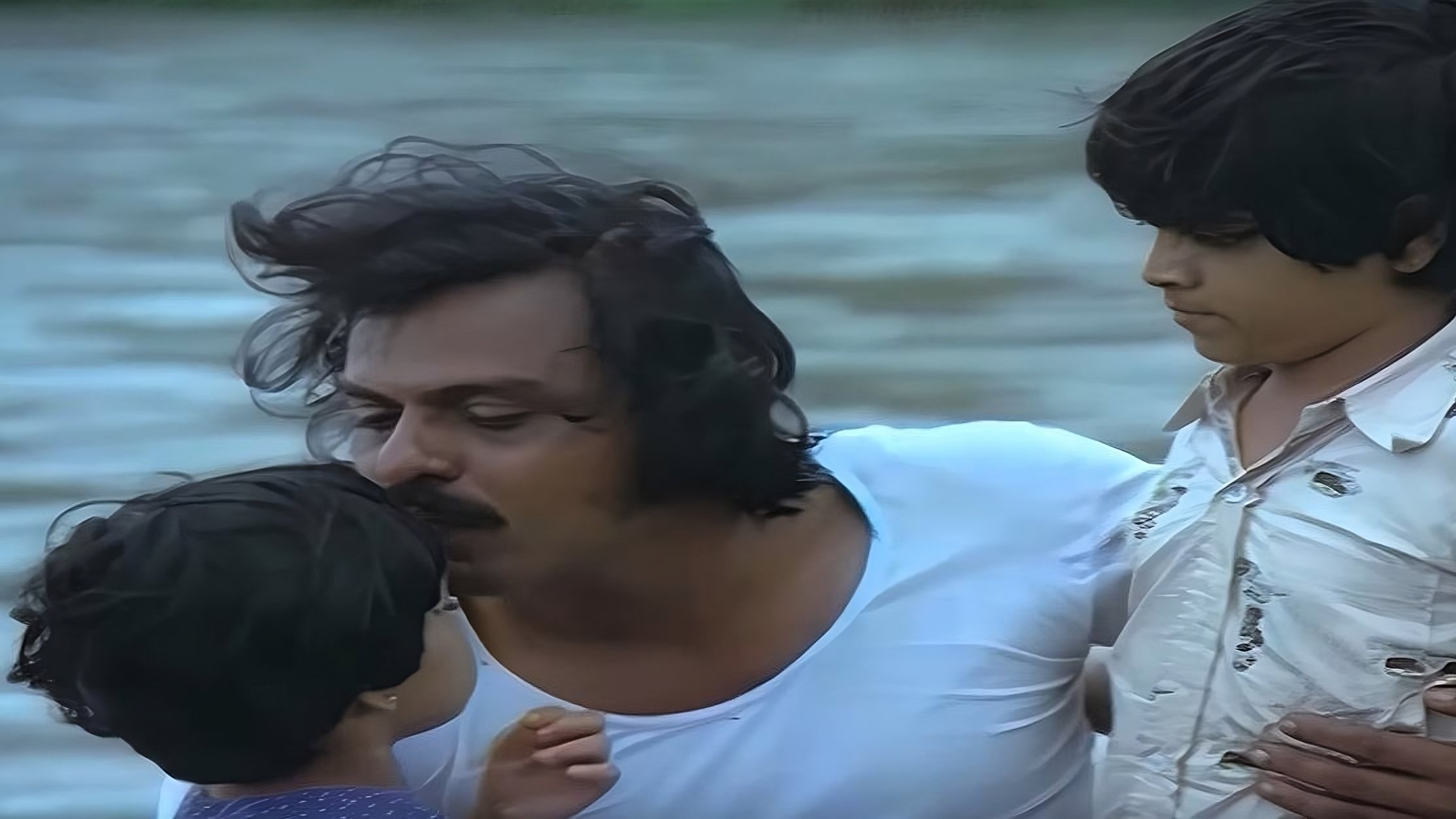

Uthiripookkal
A cruel village schoolmaster abuses family and community power until his conduct produces collective moral reckoning.
Original language: Tamil
Culture Check verdict
How we rateMixed / Contested
High confidence · Reviewed 2026-10-08
The film condemns domestic cruelty and social cowardice while placing protection of the vulnerable above patriarchal status, a strong Social Dharma position.
Read the assessment & evidenceCultural framing · not a film-quality score
Why this verdict
The specific findings behind our assessment.
The film condemns domestic cruelty and social cowardice while placing protection of the vulnerable above patriarchal status, a strong Social Dharma position.
Editorial review: Sundaravadivelu’s predation is individualized, but the village’s institutional failures accumulate: clothing discipline, a violent panchayat, refusal of legal investigation and a coercive collective execution. His sexual humiliation of Shenbagam is framed as giving blessings. Women’s challenges and the barber’s protective agency are substantial counterweight, yet the ending explicitly questions whether the villagers have become like their abuser. Caution corrects Certified to Mixed; local resistance bounds fail but cannot automatically certify the village’s resolution as moral repair. The Chittrannai adaptation is distinguished from historical evidence.
Noticed another scene? Tell us what happens and why it matters to Bharatiya values.
Reviewed 2026-10-08
Read our full editorial analysisWhat the film shows, its cultural framing, and why the verdict follows.
The story
Uthiripookkal examines Sundaravadivelu’s domestic predation and the village’s response. Women resisting him and a protective barber provide meaningful local opposition.
What matters in the film
The institutional response also accumulates harm: clothing discipline, violent panchayat action, rejection of legal investigation and collective execution. Sexual humiliation of Shenbagam is presented through blessing language.
Culture Check reading
Condemning an abuser is not equivalent to endorsing every method used against him. The ending’s question about whether the villagers have become like him makes that distinction central.
The strongest opposing reading
Local resistance and the women’s challenges give the community real internal conscience. They do not turn coercive execution into uncomplicated ethical restoration.
Why this verdict
Mixed holds the condemnation of abuse together with the village’s compromised answer; the literary adaptation is not treated as evidence of universal historical practice.
What this review does not claim
This analysis develops the film-specific published-source record. It does not claim independent full-film viewing, verified verbatim dialogue or knowledge of the filmmaker’s private intentions.
Supporting sources (1)
These sources support the analysis above. The cultural interpretation and verdict are Culture Check’s assessment.
- independently opened title-specific evidence
Supports: The story; What matters in the film; Culture Check reading; The strongest opposing reading; Why this verdict
Open the full evidence dossier
Signal map, Narrative Integrity and 3 source notes.
Open the full evidence dossier
Signal map, Narrative Integrity and 3 source notes.
Bharatiya signal map
Context for the verdict, not a film-quality score.
Dharma
4/5
Civilization
4/5
Rashtra
3/5
Itihasa
2/5
Parampara
4/5
Local Roots
4/5
Raksha
3/5
Social Dharma
4/5
Sacred Regard
4/5
Contempt Risk
0/5
Narrative Integrity
What changed, what it may mean, and what we can prove.
Evidence trail
Source notes behind this review.
film · Wikipedia title discovery
Title/year, credited premise and publicly documented plot context for Uthiripookkal (1979) were checked as the baseline film record.
View sourcefilm · IMDb title discovery
Independent title/credits discovery was used to cross-check that the certification attaches to the intended 1979 film rather than a remake or namesake.
View sourcereview · independently opened title-specific evidence
Documents Chittrannai adaptation, women’s challenges, barber agency, violent panchayat, sexualized blessings and the village’s coercive execution questioned by the ending.
View sourceCulture Check is a declared Bharatiya cultural signal, not a film-quality rating. Facts, interpretation and claims about intent are kept separate, and factual caveats do not automatically override the certification axis.
Editorial revision history
2 recorded reviews
Open
Editorial revision history
2 recorded reviews
Review 2
2026-10-08
Mixed / Contested
The film condemns domestic cruelty and social cowardice while placing protection of the vulnerable above patriarchal status, a strong Social Dharma position.
Review 1
2026-10-03
Sanghi Certified
The film condemns domestic cruelty and social cowardice while placing protection of the vulnerable above patriarchal status, a strong Social Dharma position.
About the film
The film.
A cruel village schoolmaster abuses family and community power until his conduct produces collective moral reckoning.
Keep exploring.
Return to discovery with your OTT filters and find another film.