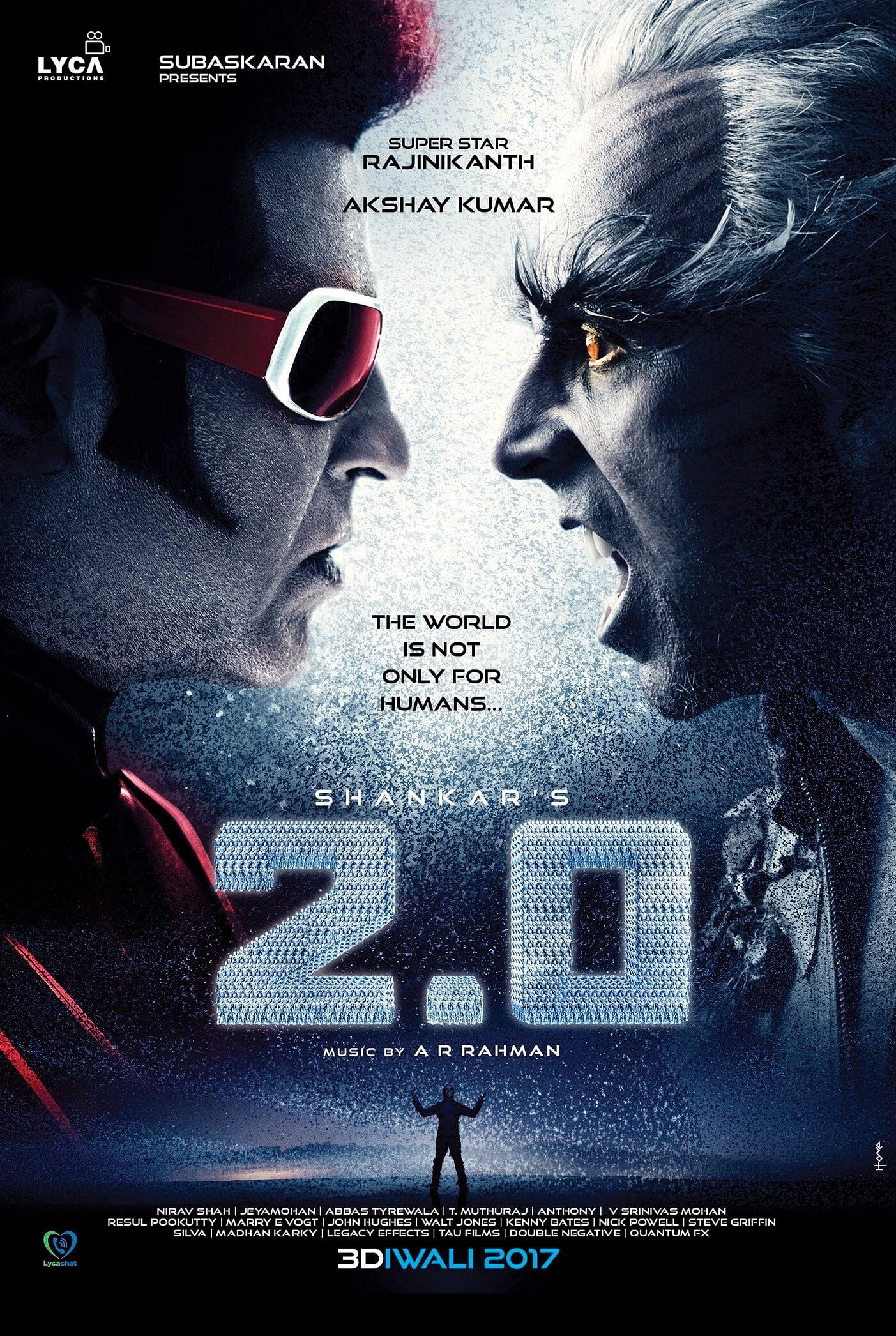
2.0
2.0 places care for vulnerable creatures beside the responsibility to protect people. Pakshirajan’s grief is understandable; the decisive moral problem begins when that grief makes ordinary phone users targets. Vaseegaran and the robots answer a threat generated through the very technology the story distrusts.
Original language: Tamil
Culture Check verdict
How we rateReviewed · Neutral
Medium confidence · Reviewed 2026-10-13
Neutral recognizes protection and compassion while qualifying the treatment of collective guilt. Pakshirajan is assessed as a fictional character; a critic’s comparison with Salim Ali is not proof that the film rewrites the ornithologist’s religious identity. Neither technological spectacle nor the bird-lover’s suffering substitutes for accountability.
Read the assessment & evidenceCultural framing · not a film-quality score
Why this verdict
The specific findings behind our assessment.
Neutral recognizes protection and compassion while qualifying the treatment of collective guilt. Pakshirajan is assessed as a fictional character; a critic’s comparison with Salim Ali is not proof that the film rewrites the ornithologist’s religious identity. Neither technological spectacle nor the bird-lover’s suffering substitutes for accountability.
Neutral: care for birds and public protection are substantive, while emotional sympathy for Pakshirajan risks excusing collective punishment. The ending rejects that punishment; neither a verified Salim Ali biography nor an exact Tamil anti-God line is claimed.
Noticed another scene? Tell us what happens and why it matters to Bharatiya values.
Reviewed 2026-10-13
Read our full editorial analysisWhat the film shows, its cultural framing, and why the verdict follows.
The story and its moral choices
2.0 places care for vulnerable creatures beside the responsibility to protect people. Pakshirajan’s grief is understandable; the decisive moral problem begins when that grief makes ordinary phone users targets. Vaseegaran and the robots answer a threat generated through the very technology the story distrusts.
The consequential scenes
The film’s pathos sometimes gives retaliation more emotional legitimacy than it deserves. Its ending nevertheless rejects collective punishment. Sacred references, including Shiva-related imagery, also complicate the claim that scientific rescue requires wholesale rejection of faith. A God comparison reported in a Hindi-dub review is retained within that edition’s scope, without being presented as verified Tamil speech.
The cultural reading
Neutral recognizes protection and compassion while qualifying the treatment of collective guilt. Pakshirajan is assessed as a fictional character; a critic’s comparison with Salim Ali is not proof that the film rewrites the ornithologist’s religious identity. Neither technological spectacle nor the bird-lover’s suffering substitutes for accountability.
The scope of this assessment
Compassion for birds, collective blame, scientific rescue and the disputed God/source questions coexist.
Certification
Neutral: care for birds and public protection are substantive, while emotional sympathy for Pakshirajan risks excusing collective punishment. The ending rejects that punishment; neither a verified Salim Ali biography nor an exact Tamil anti-God line is claimed.
What this review does not claim
Source-based editorial assessment with owner scene calibration where specified; no independent full-film editor screening or unverified exact dialogue is claimed.
Supporting sources (5)
These sources support the analysis above. The cultural interpretation and verdict are Culture Check’s assessment.
- Sudhir Srinivasan
Supports: The story and its moral choices; The consequential scenes; The cultural reading; The scope of this assessment; Certification
- Anna M. M. Vetticad
Supports: The story and its moral choices; The consequential scenes; The cultural reading; The scope of this assessment; Certification
- Devesh Sharma
Supports: The story and its moral choices; The consequential scenes; The cultural reading; The scope of this assessment; Certification
- Signe Cohen
Supports: The story and its moral choices; The consequential scenes; The cultural reading; The scope of this assessment; Certification
- onmanorama.com
Supports: The story and its moral choices; The consequential scenes; The cultural reading; The scope of this assessment; Certification
Open the full evidence dossier
Signal map, Narrative Integrity and 7 source notes.
Open the full evidence dossier
Signal map, Narrative Integrity and 7 source notes.
Bharatiya signal map
Context for the verdict, not a film-quality score.
Dharma
3/5
Civilization
3/5
Parampara
3/5
Local Roots
4/5
Raksha
4/5
Social Dharma
4/5
Sacred Regard
3/5
Contempt Risk
1/5
Narrative Integrity
What changed, what it may mean, and what we can prove.
Evidence trail
Source notes behind this review.
review · Sudhir Srinivasan
Bird protection motivates Pakshirajan; indiscriminate punishment eventually puts people at risk. Vaseegaran protects the public; Pakshirajan is a fictional ornithologist aggressor with a sympathetic cause. The paper interprets his bird-king name through Garuda imagery; a separate critic compares him with Salim Ali. The reported threat is a bird-shaped force made from phones, opposed by Chitti and his replicas. The Hindi-dub critic reports Vaseegaran linking unexplained phenomena with terrorism or God; the Tamil critic describes aura explanations. The bird-lover is given a tragic backstory before becoming a mass aggressor; the Tamil review notes celebratory music during threatening action. Nila acts as a technical assistant in the rescue; Sana is reported jealous of her. Source scope and remaining qualifications are recorded in the film-specific rule ledger.
View sourcereview · Anna M. M. Vetticad
The Hindi-dub critic reports Vaseegaran linking unexplained phenomena with terrorism or God; the Tamil critic describes aura explanations. The reviews discuss phone puns and technological banter; the only retrieved God comparison is from the Hindi dub. Compassion for birds, collective blame, scientific rescue and the disputed God/source questions coexist.
View sourcereview · Devesh Sharma
Bird protection motivates Pakshirajan; indiscriminate punishment eventually puts people at risk. Vaseegaran protects the public; Pakshirajan is a fictional ornithologist aggressor with a sympathetic cause. The paper interprets his bird-king name through Garuda imagery; a separate critic compares him with Salim Ali. The reported threat is a bird-shaped force made from phones, opposed by Chitti and his replicas. The bird-lover is given a tragic backstory before becoming a mass aggressor; the Tamil review notes celebratory music during threatening action. Nila acts as a technical assistant in the rescue; Sana is reported jealous of her. Pakshirajan treats phone users as culpable; the revived technology protects the public. Source scope and remaining qualifications are recorded in the film-specific rule ledger.
View sourcereview · Signe Cohen
Vaseegaran protects the public; Pakshirajan is a fictional ornithologist aggressor with a sympathetic cause. The paper interprets his bird-king name through Garuda imagery; a separate critic compares him with Salim Ali. The Hindi-dub critic reports Vaseegaran linking unexplained phenomena with terrorism or God; the Tamil critic describes aura explanations. The paper reads Shiva, Garuda, yantra and Advaita parallels into the imagery; no explicit borrowed Upanishadic verse in the film is established. The director describes a fictional conception from a mobile-phone image; a critic’s Salim Ali comparison is not a claimed biography. Pakshirajan’s suicide and supernatural retaliation belong to the fictional story described by the reviews and the director’s conception account. Source scope and remaining qualifications are recorded in the film-specific rule ledger.
View sourceinterview · onmanorama.com
Vaseegaran protects the public; Pakshirajan is a fictional ornithologist aggressor with a sympathetic cause. The paper interprets his bird-king name through Garuda imagery; a separate critic compares him with Salim Ali. The director describes a fictional conception from a mobile-phone image; a critic’s Salim Ali comparison is not a claimed biography. Pakshirajan’s suicide and supernatural retaliation belong to the fictional story described by the reviews and the director’s conception account. The opened interview explains fictional conception; no identified real-person source/consent claimant is established by the targeted material. The scientist protector is fictional; no named real scientist’s achievement and faith are represented as historically verified.
View sourcereview · Filename claims original Tamil, but background-song annotation names Telugu film Arya 2; exact source audio and provenance not authenticated.
Unauthenticated edition/translation lead, read as text; not independent authentication of Tamil dialogue or visual staging. Opened contextual source retained for the source-to-screen comparison and factual limitations documented in this film’s sixteen-rule ledger.
View sourceprimary · CultureCheck owner approval and firsthand scene calibration — 13 October 2026
Owner accepts the identified callouts and delegates final weight. Neutral adopted; a Hindi-dub line is not authenticated as exact Tamil dialogue. This is the actual read owner account, not an additional independent press source or editor screening.
View sourceCulture Check is a declared Bharatiya cultural signal, not a film-quality rating. Facts, interpretation and claims about intent are kept separate, and factual caveats do not automatically override the certification axis.
Editorial revision history
1 recorded review
Open
Editorial revision history
1 recorded review
Review 1
2026-10-13
Reviewed · Neutral
Neutral recognizes protection and compassion while qualifying the treatment of collective guilt. Pakshirajan is assessed as a fictional character; a critic’s comparison with Salim Ali is not proof that the film rewrites the ornithologist’s religious identity. Neither technological spectacle nor the bird-lover’s suffering substitutes for accountability.
About the film
The film.
2.0 places care for vulnerable creatures beside the responsibility to protect people. Pakshirajan’s grief is understandable; the decisive moral problem begins when that grief makes ordinary phone users targets. Vaseegaran and the robots answer a threat generated through the very technology the story distrusts.
Keep exploring.
Return to discovery with your OTT filters and find another film.