Teesri Kasam
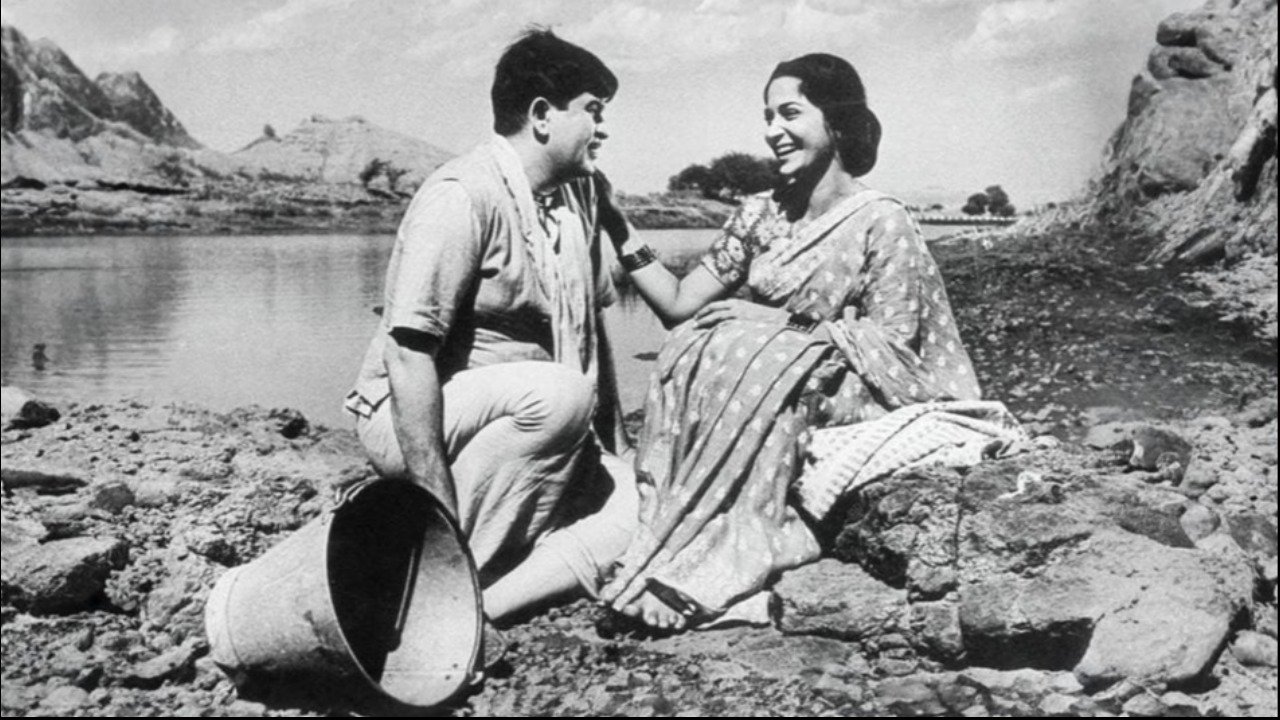
A bullock-cart driver forms a bond with a travelling nautanki performer while moving through a deeply rural cultural landscape.
Original language: Hindi
Culture Check verdict
How we rateMixed / Contested
High confidence · Reviewed 2026-10-08
Folk performance, village life, simplicity and moral tenderness are treated from within a rooted cultural world rather than as objects of ridicule.
Read the assessment & evidenceCultural framing · not a film-quality score
Why this verdict
The specific findings behind our assessment.
Folk performance, village life, simplicity and moral tenderness are treated from within a rooted cultural world rather than as objects of ridicule.
Editorial review: Folk song and shared travel give the rural world real tenderness, but Hiraman’s protective idealization turns into a demand that Hirabai abandon performance for respectability. Her refusal has agency, yet the final vow to avoid dancers leaves the profession’s stigma unresolved rather than transforming it. Caution changes Certified to Mixed: affection and resistance bound fail without cancelling the cumulative sexual-respectability burden. Neither the fair nor the local legend is intrinsically contemptible; the issue is the unequal social consequence of who may belong with dignity.
Noticed another scene? Tell us what happens and why it matters to Bharatiya values.
Reviewed 2026-10-08
Open the full evidence dossier
Signal map, Narrative Integrity and 3 source notes.
Open the full evidence dossier
Signal map, Narrative Integrity and 3 source notes.
Bharatiya signal map
Context for the verdict, not a film-quality score.
Dharma
4/5
Civilization
4/5
Rashtra
3/5
Itihasa
2/5
Parampara
4/5
Local Roots
4/5
Raksha
3/5
Social Dharma
4/5
Sacred Regard
4/5
Contempt Risk
0/5
Narrative Integrity
What changed, what it may mean, and what we can prove.
Evidence trail
Source notes behind this review.
film · Wikipedia title discovery
Title/year, credited premise and publicly documented plot context for Teesri Kasam (1966) were checked as the baseline film record.
View sourcefilm · IMDb title discovery
Independent title/credits discovery was used to cross-check that the certification attaches to the intended 1966 film rather than a remake or namesake.
View sourcereview · title-specific opened plot or critical evidence
Opened complete plot distinguishes folk tenderness, Hirabai’s refusal and the unresolved third vow excluding dancers.
View sourceCulture Check is a declared Bharatiya cultural signal, not a film-quality rating. Facts, interpretation and claims about intent are kept separate, and factual caveats do not automatically override the certification axis.
Editorial revision history
2 recorded reviews
Open
Editorial revision history
2 recorded reviews
Review 2
2026-10-08
Mixed / Contested
Folk performance, village life, simplicity and moral tenderness are treated from within a rooted cultural world rather than as objects of ridicule.
Review 1
2026-10-03
Sanghi Certified
Folk performance, village life, simplicity and moral tenderness are treated from within a rooted cultural world rather than as objects of ridicule.
About the film
The film.
A bullock-cart driver forms a bond with a travelling nautanki performer while moving through a deeply rural cultural landscape.
Keep exploring.
Return to discovery with your OTT filters and find another film.