
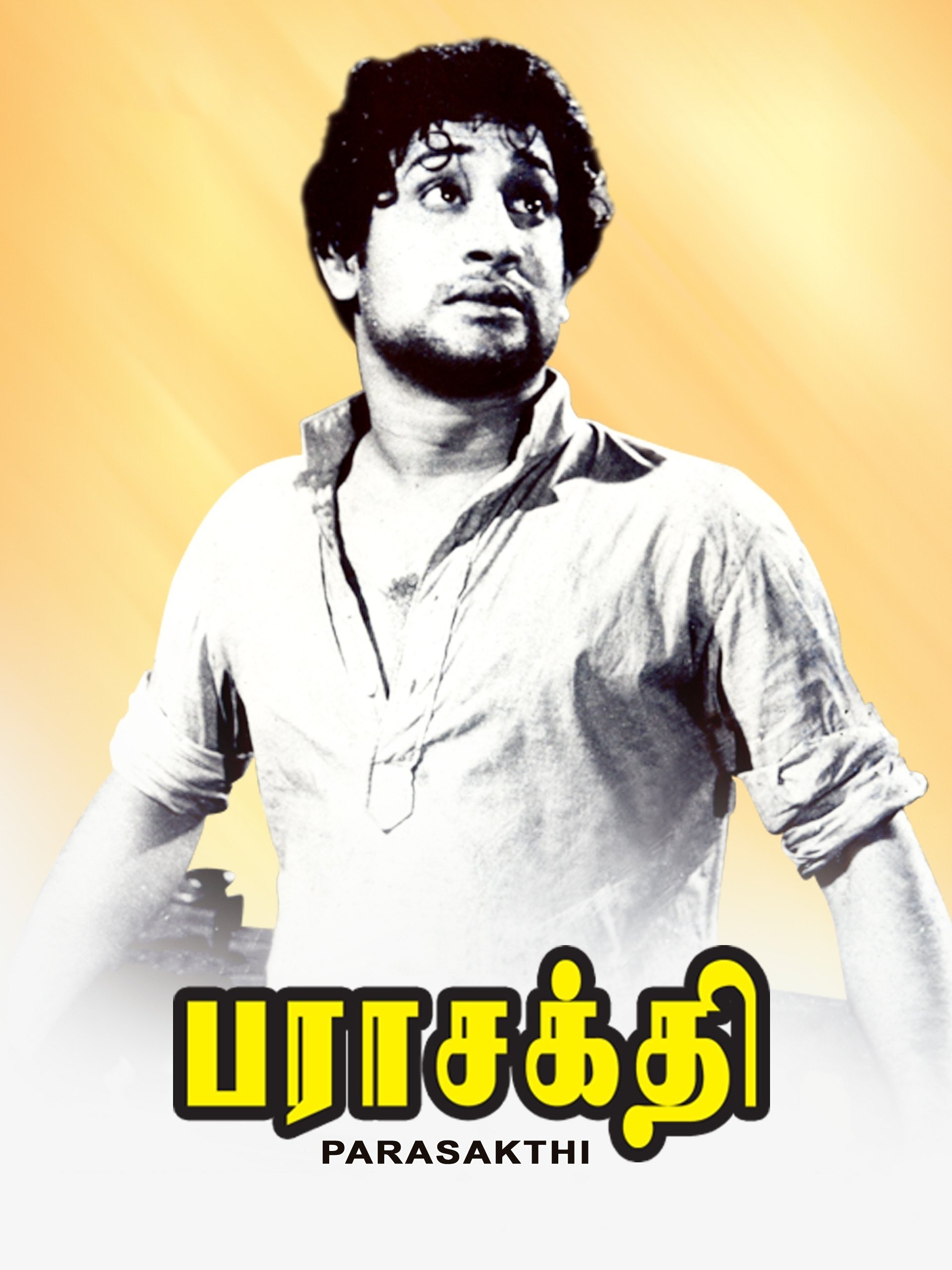
Parasakthi
A separated family endures poverty and exploitation while the film attacks social hypocrisy, including abuses around religious institutions.
Original language: Tamil
Culture Check verdict
How we rateReviewed · Not Certified
High confidence · Reviewed 2026-10-08
Parasakthi is a foundational work of Dravidian cinema whose political-cultural function is explicitly tied to the movement shaped by E.V. Ramasamy/Periyar and the Self-Respect tradition.
Read the assessment & evidenceCultural framing · not a film-quality score
Why this verdict
Does not meet Culture Check’s civilizational certification standard · Not a film-quality score
The specific findings behind our assessment.
Parasakthi is a foundational work of Dravidian cinema whose political-cultural function is explicitly tied to the movement shaped by E.V. Ramasamy/Periyar and the Self-Respect tradition.
Its rationalist challenge to religion, god and priesthood is not merely a bounded story about one abusive individual. Under the declared Bharatiya/Hindu-civilizational lens, the film’s affirmative Dravidian rationalist programme and anti-sacred polemic rule out Sanghi Certified.
Noticed another scene? Tell us what happens and why it matters to Bharatiya values.
Reviewed 2026-10-08
Read our full editorial analysisWhat the film shows, its cultural framing, and why the verdict follows.
The story
The 1952 Parasakthi combines family suffering with a forceful rationalist intervention into religion, god and priesthood. Historical and scholarly accounts locate it within Dravidian and Self-Respect cinema.
What matters in the film
Its political-cultural function is sustained rather than inferred from a single abusive priest or a contributor’s affiliation. The challenge to sacred authority is part of the film’s governing programme.
Culture Check reading
Under Culture Check’s declared Bharatiya and Hindu-civilizational lens, that affirmative rationalist polemic is incompatible with certification. This is a judgment about the film’s programme, not the worth of its viewers.
The strongest opposing reading
A sympathetic reading can credit its exposure of exploitation and its historical importance. Those merits do not turn a broad anti-sacred intervention into a bounded criticism of one wrongdoer.
Why this verdict
Not Certified reflects the documented ideological and sacred framing; it should not be confused with a claim that the film lacks artistic or historical significance.
What this review does not claim
This analysis develops the film-specific published-source record. It does not claim independent full-film viewing, verified verbatim dialogue or knowledge of the filmmaker’s private intentions.
Supporting sources (3)
These sources support the analysis above. The cultural interpretation and verdict are Culture Check’s assessment.
- title-specific opened plot or critical evidence
Supports: The story; What matters in the film; Culture Check reading; The strongest opposing reading; Why this verdict
- Roja Muthiah Research Library / Google Arts & Culture — Dravidian Cinema
Supports: The story; What matters in the film; Culture Check reading; The strongest opposing reading; Why this verdict
- The Indian Express — Karunanidhi’s film writing and Parasakthi
Supports: The story; What matters in the film; Culture Check reading; The strongest opposing reading; Why this verdict
Open the full evidence dossier
Signal map, Narrative Integrity and 5 source notes.
Open the full evidence dossier
Signal map, Narrative Integrity and 5 source notes.
Bharatiya signal map
Context for the verdict, not a film-quality score.
Dharma
3/5
Civilization
3/5
Rashtra
2/5
Itihasa
2/5
Parampara
2/5
Local Roots
4/5
Raksha
3/5
Social Dharma
4/5
Sacred Regard
2/5
Contempt Risk
2/5
Narrative Integrity
What changed, what it may mean, and what we can prove.
Evidence trail
Source notes behind this review.
film · Wikipedia title discovery
Title/year, credited premise and publicly documented plot context for Parasakthi (1952) were checked as the baseline film record.
View sourcefilm · IMDb title discovery
Independent title/credits discovery was used to cross-check that the certification attaches to the intended 1952 film rather than a remake or namesake.
View sourcereview · title-specific opened plot or critical evidence
Opened plot supplies temple predation and developed internal aid; opened research-library exhibition identifies affirmative movement framing.
View sourceprimary · Roja Muthiah Research Library / Google Arts & Culture — Dravidian Cinema
The research-library exhibition identifies Dravidian cinema as an extension of the Self-Respect movement inspired by E.V. Ramasamy/Periyar or Anna and presents Parasakthi as a landmark declaration of the Dravidian era in cinema and politics.
View sourcereview · The Indian Express — Karunanidhi’s film writing and Parasakthi
Film scholars quoted by Indian Express describe Karunanidhi using Parasakthi to express his ideas on religion, god and priesthood as part of the political movement rather than as incidental dialogue.
View sourceCulture Check is a declared Bharatiya cultural signal, not a film-quality rating. Facts, interpretation and claims about intent are kept separate, and factual caveats do not automatically override the certification axis.
Editorial revision history
2 recorded reviews
Open
Editorial revision history
2 recorded reviews
Review 2
2026-10-08
Reviewed · Not Certified
Parasakthi is a foundational work of Dravidian cinema whose political-cultural function is explicitly tied to the movement shaped by E.V. Ramasamy/Periyar and the Self-Respect tradition.
Review 1
2026-10-03
Mixed / Contested
Its concern for the vulnerable and attack on exploitation support Social Dharma, and the family-reunion arc remains culturally rooted.
About the film
The film.
A separated family endures poverty and exploitation while the film attacks social hypocrisy, including abuses around religious institutions.
Keep exploring.
Return to discovery with your OTT filters and find another film.