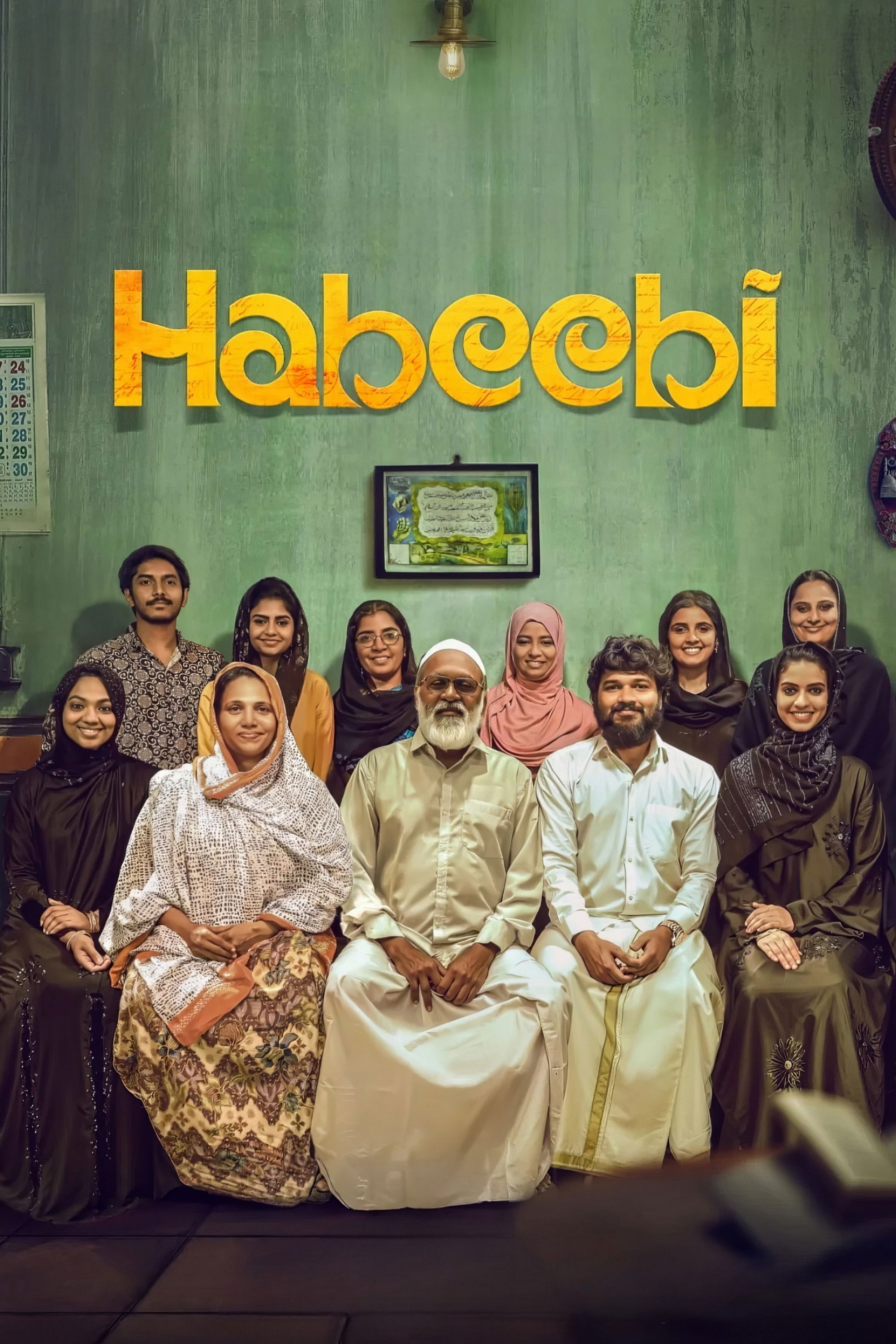
Habeebi
Weaver Yousuf hopes son Abu will sustain handloom work; Abu’s unspoken love for higher-status cousin Nilofar unfolds amid technological change and migration.
Original language: Tamil
Culture Check verdict
How we rateSanghi Certified
High confidence · Reviewed 2026-10-11
A Tamil period romance following a Muslim weaving family across decades as handloom livelihood declines and family relationships change.
Read the assessment & evidenceCultural framing · not a film-quality score
Why this verdict
Called an insult. Worn as a badge.
The specific findings behind our assessment.
A Tamil period romance following a Muslim weaving family across decades as handloom livelihood declines and family relationships change.
Independent reviews establish locally rooted Tamil social life, handloom craft continuity and family memory as durable themes. Cinema Express also notes that a supporting character briefly quotes Ambedkar, Periyar and Martin Luther King while arguing for women to speak up; the review explicitly says the film does not develop those political moments and instead remains focused on Yusuf and his family, so the reference is recorded but does not amount to a film-level Periyarist programme.
Noticed another scene? Tell us what happens and why it matters to Bharatiya values.
Reviewed 2026-10-11
Read our full editorial analysisWhat the film shows, its cultural framing, and why the verdict follows.
The story
Weaver Yousuf hopes Abu will continue the handloom livelihood. Abu’s unspoken love for higher-status cousin Nilofar develops amid technological change and migration.
What matters in the film
Craft, status and family expectation are interwoven: a son’s future concerns both affection and the survival of work that has organised the household’s life.
Culture Check reading
The affirmative cultural material is locally rooted Muslim Tamil experience, transmitted through labour and memory. Continuity has substance here because economic change puts it under pressure.
The strongest opposing reading
A supporting character’s references to Ambedkar, Periyar and Martin Luther King merit recording. The cited criticism says those moments are not developed into the film’s governing political programme.
Why this verdict
Certified rests on the sustained attention to handloom continuity and family memory, while recognising that preserving a livelihood does not settle every personal choice.
What this review does not claim
This analysis develops the film-specific published-source record. It does not claim independent full-film viewing, verified verbatim dialogue or knowledge of the filmmaker’s private intentions.
Supporting sources (2)
These sources support the analysis above. The cultural interpretation and verdict are Culture Check’s assessment.
- Times of India — Habeebi review
Supports: The story; What matters in the film; Culture Check reading; The strongest opposing reading; Why this verdict
- Cinema Express — Habeebi review
Supports: The story; What matters in the film; Culture Check reading; The strongest opposing reading; Why this verdict
Open the full evidence dossier
Signal map, Narrative Integrity and 2 source notes.
Open the full evidence dossier
Signal map, Narrative Integrity and 2 source notes.
Bharatiya signal map
Context for the verdict, not a film-quality score.
Dharma
4/5
Civilization
2/5
Rashtra
1/5
Itihasa
1/5
Parampara
3/5
Local Roots
3/5
Raksha
4/5
Social Dharma
4/5
Contempt Risk
0/5
Narrative Integrity
What changed, what it may mean, and what we can prove.
Evidence trail
Source notes behind this review.
review · Times of India — Habeebi review
A Tamil period romance following a Muslim weaving family across decades as handloom livelihood declines and family relationships change.
View sourcereview · Cinema Express — Habeebi review
Independent reviews establish locally rooted Tamil social life, handloom craft continuity and family memory as durable themes. Cinema Express also notes that a supporting character briefly quotes Ambedkar, Periyar and Martin Luther King while arguing for women to speak up; the review explicitly says the film does not develop those political moments and instead remains focused on Yusuf and his family, so the reference is recorded but does not amount to a film-level Periyarist programme.
View sourceCulture Check is a declared Bharatiya cultural signal, not a film-quality rating. Facts, interpretation and claims about intent are kept separate, and factual caveats do not automatically override the certification axis.
Editorial revision history
3 recorded reviews
Open
Editorial revision history
3 recorded reviews
Review 3
2026-10-11
Sanghi Certified
A Tamil period romance following a Muslim weaving family across decades as handloom livelihood declines and family relationships change.
Review 2
2026-10-03
Sanghi Certified
A Tamil period romance following a Muslim weaving family across decades as handloom livelihood declines and family relationships change.
Review 1
2026-10-03
Sanghi Certified
The period drama tracks a weaving family and the decline of handloom work across four decades in a Tamil Muslim town.
About the film
The film.
Weaver Yousuf hopes son Abu will sustain handloom work; Abu’s unspoken love for higher-status cousin Nilofar unfolds amid technological change and migration.
Keep exploring.
Return to discovery with your OTT filters and find another film.