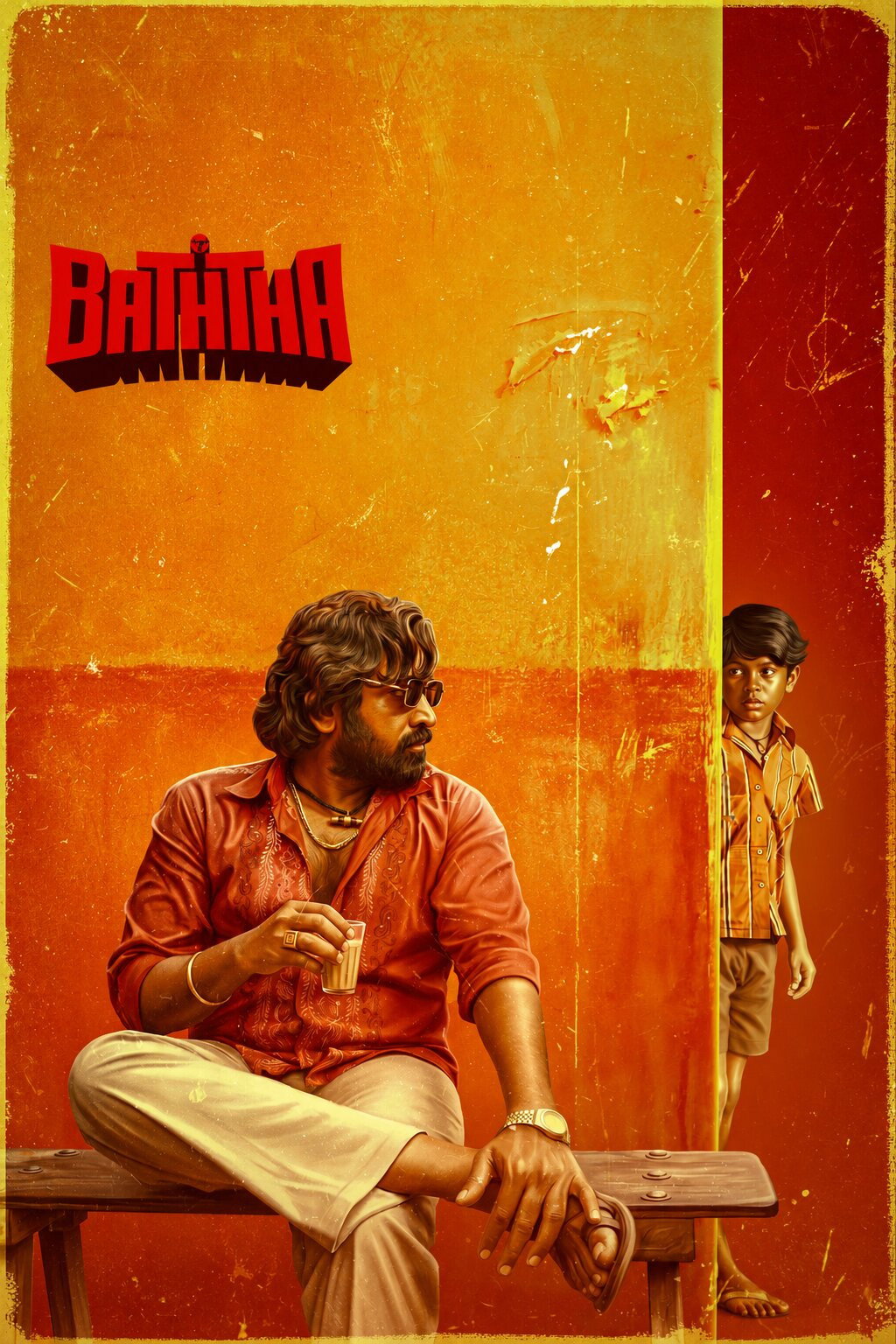
Baththa
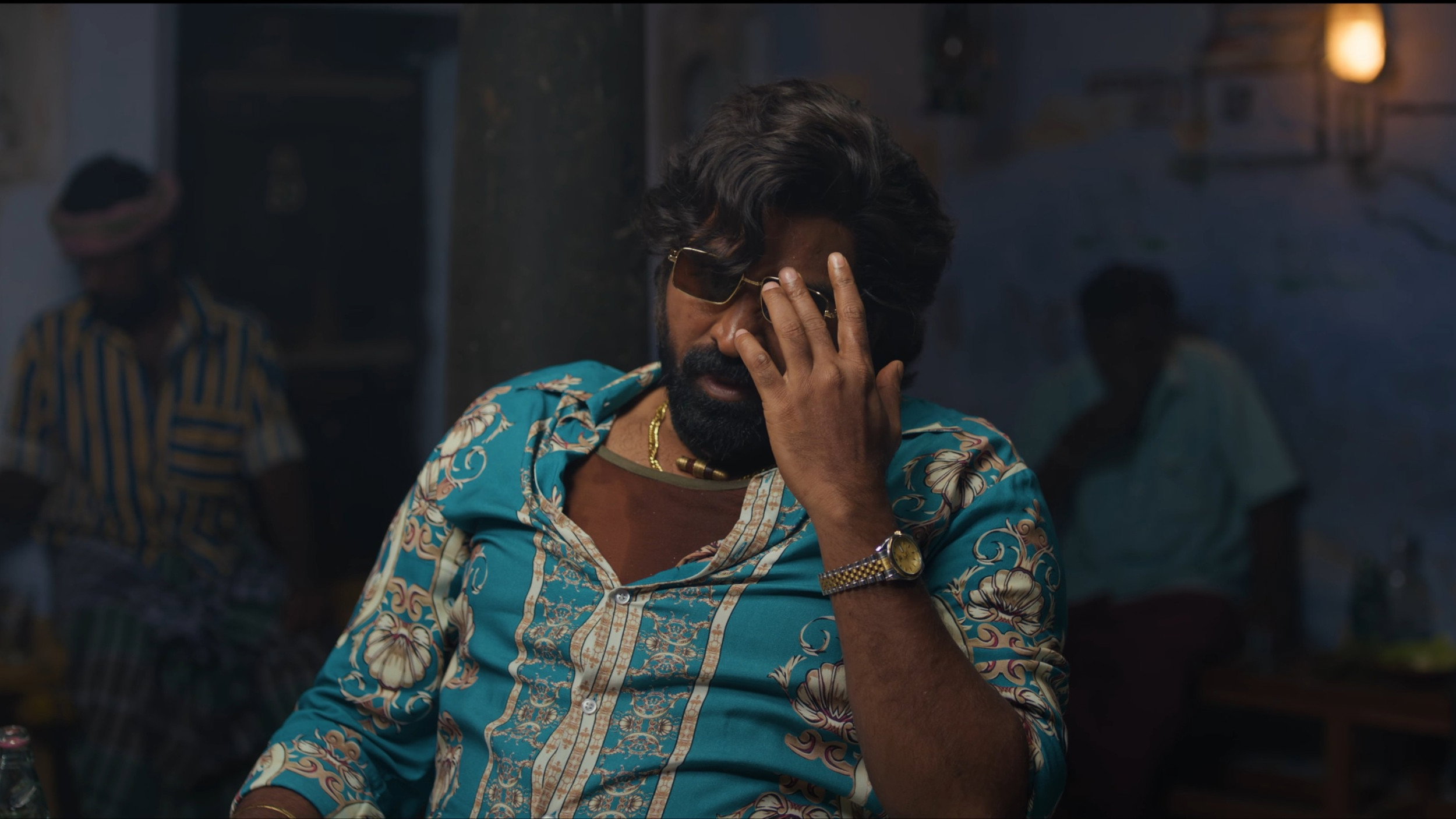
A feared gangster harms his rival and behaves violently toward his wife; an encounter with the frightened child Sabari confronts him with the human cost of his persona.
Original language: Tamil
Culture Check verdict
How we rateSanghi Certified
High confidence · Reviewed 2026-10-11
The film uses a feared 1980s Madras gangster’s encounter with a schoolboy to dismantle the violent persona he has built and move him toward guilt, responsibility, family repair and human connection.
Read the assessment & evidenceCultural framing · not a film-quality score
Streaming options listed for India · rental or purchase charges may apply.
Why this verdict
Called an insult. Worn as a badge.
The specific findings behind our assessment.
The film uses a feared 1980s Madras gangster’s encounter with a schoolboy to dismantle the violent persona he has built and move him toward guilt, responsibility, family repair and human connection.
Certification applies to the film-level movement away from domination and violence rather than to the gangster’s starting conduct; the adversarial sweep found no material sacred or ideological programme competing with that redemption arc.
Noticed another scene? Tell us what happens and why it matters to Bharatiya values.
Reviewed 2026-10-11
Read our full editorial analysisWhat the film shows, its cultural framing, and why the verdict follows.
The story
A feared gangster's violence towards a rival and his wife establishes the human cost of his persona. His encounter with the frightened child Sabari forces that self-image into contact with vulnerability.
What matters in the film
The child's presence matters as a challenge to domination, not merely an opportunity for the gangster to appear tender. The positive direction depends on what he must change after recognising fear in another person.
Culture Check reading
Culture Check gives weight to the reported movement towards guilt, family repair and responsibility. This evaluates a departure from the violent identity rather than certifying the identity itself.
The strongest opposing reading
The strongest objection is that a criminal's affection for a child can soften his image without reducing the glamour of his power. That distinction is essential to the redemption reading.
Why this verdict
Certified follows the film-level movement away from violence and mistreatment towards human connection. Baththa's positive account is conditional on consequential reform, with the gangster's initial wrongdoing retained as the problem the story must answer.
What this review does not claim
This analysis develops the film-specific published-source record. It does not claim independent full-film viewing, verified verbatim dialogue or knowledge of the filmmaker’s private intentions.
Supporting sources (3)
These sources support the analysis above. The cultural interpretation and verdict are Culture Check’s assessment.
- India Today — Baththa review
Supports: The story; What matters in the film; Culture Check reading; The strongest opposing reading; Why this verdict
- Times of India — Baththa review
Supports: The story; What matters in the film; Culture Check reading; The strongest opposing reading; Why this verdict
- The Hindu — Baththa review
Supports: The story; What matters in the film; Culture Check reading; The strongest opposing reading; Why this verdict
Open the full evidence dossier
Signal map, Narrative Integrity and 3 source notes.
Open the full evidence dossier
Signal map, Narrative Integrity and 3 source notes.
Bharatiya signal map
Context for the verdict, not a film-quality score.
Dharma
4/5
Civilization
2/5
Rashtra
1/5
Itihasa
1/5
Parampara
2/5
Local Roots
4/5
Raksha
3/5
Social Dharma
5/5
Sacred Regard
1/5
Contempt Risk
0/5
Narrative Integrity
What changed, what it may mean, and what we can prove.
Evidence trail
Source notes behind this review.
review · India Today — Baththa review
The review describes the child as a reality check that forces the feared don to reassess his identity, behaviour toward his wife and daughter, guilt and choice to live differently.
View sourcereview · Times of India — Baththa review
The review centres the unexpected bond between a schoolboy and a feared gangster and describes the encounter as changing the gangster’s emotional direction.
View sourcereview · The Hindu — Baththa review
The review reads the film through the gangster-child relationship and the goodness that survives underneath a socially constructed violent persona.
View sourceCulture Check is a declared Bharatiya cultural signal, not a film-quality rating. Facts, interpretation and claims about intent are kept separate, and factual caveats do not automatically override the certification axis.
Editorial revision history
3 recorded reviews
Open
Editorial revision history
3 recorded reviews
Review 3
2026-10-11
Sanghi Certified
The film uses a feared 1980s Madras gangster’s encounter with a schoolboy to dismantle the violent persona he has built and move him toward guilt, responsibility, family repair and human connection.
Review 2
2026-10-07
Sanghi Certified
The film uses a feared 1980s Madras gangster’s encounter with a schoolboy to dismantle the violent persona he has built and move him toward guilt, responsibility, family repair and human connection.
Review 1
2026-10-03
Sanghi Certified
The central bond is between a schoolboy and a gangster whose encounter changes the latter’s emotional direction.
About the film
The film.
A feared gangster harms his rival and behaves violently toward his wife; an encounter with the frightened child Sabari confronts him with the human cost of his persona.
Keep exploring.
Return to discovery with your OTT filters and find another film.